


The best prospecting choice is not always the database with the most names. It is the platform that helps you spot a company fit and explain why your service could matter now. For consultants comparing the top 5 lead research platforms for marketing consultants in 2026, our lead research software for consultants stands out for matching daily company research to your stated service, ideal client, and market.
The five options serve different jobs: company-fit research, contact discovery, digital-market signals, or private-company growth tracking. The U.S. Small Business Administration advises businesses to examine demand, market size, competition, and pricing when researching markets. Those same checks can help you define an ideal client profile before choosing a platform. SBA market research guidance provides a useful starting point.
Top 5 Lead Research Platforms for Marketing Consultants in 2026
For a consultant who wants research tailored to a service, ProspectDog is the most directly aligned starting point. The other platforms can be stronger when your priority is contact coverage, online-market data, or signals about private companies.
| Rank | Platform | Research focus | Contact and action path |
|---|---|---|---|
| 1 | ProspectDog | Service fit, hiring, expansion, and company research | Daily brief with evidence and suggested outreach; you verify contacts and send |
| 2 | SMARTe | B2B contact research and market signals | Contact data and signals to guide your own qualification and outreach |
| 3 | Crunchbase | Private-company profiles and growth events | Company signals help with timing; qualify the need and contact separately |
| 4 | ZoomInfo | Company and contact intelligence with go-to-market features | Broad data and workflows; pricing is sales-quoted |
| 5 | Similarweb | Digital-market signals and company research | Sales Intelligence combines digital context and contact discovery |
1. ProspectDog
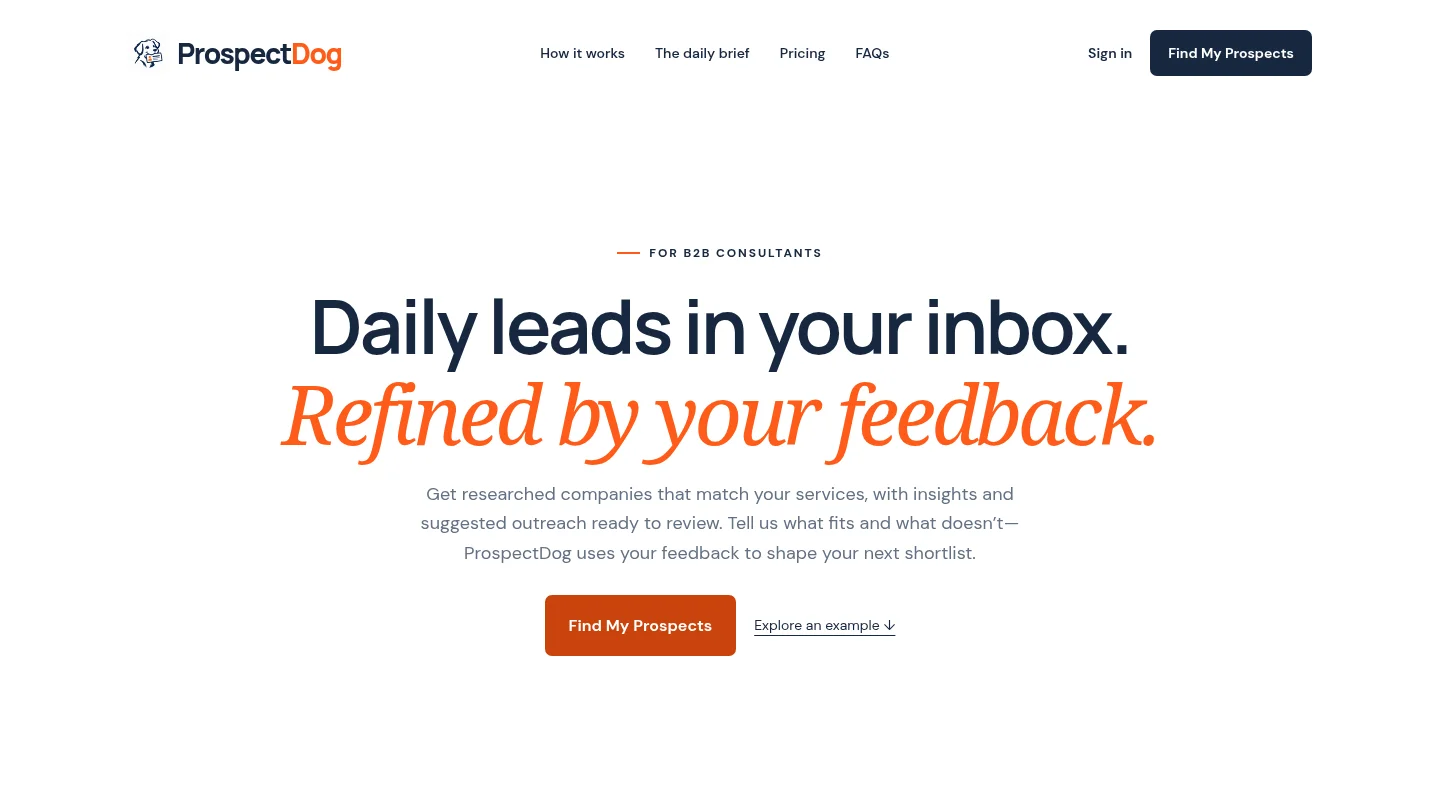
Best for: B2B marketing consultants who want daily company research connected to their service, ideal client, and market.
Tell us what you offer, your expertise, and the companies you want to reach. We use those preferences to shape a daily brief with researched companies, source information, and reasons they might need your service. Signals can include hiring, expansion, or a connection between a company’s situation and your offer.
The brief also includes suggested subject lines, an email draft, and practical conversation tips. You review the source, decide whether the prospect is a fit, find or verify the right contact, personalize the draft, and send it from your own email account. For a closer look at this part of the workflow, see our outreach preparation software for marketing consultants.
Starter costs $49 per month and includes up to 10 requested leads in one daily brief. Pro costs $99 per month and includes up to 20 requested leads in one daily brief. After signup, you can receive one researched brief without a card. Eligible accounts can also start a seven-day trial with a payment method; subscriptions renew monthly unless canceled before the trial ends.
Pros
- Research is shaped around your offer and ideal client, rather than only a broad contact search.
- Each lead includes evidence and a suggested reason to reach out, helping you decide whether to pursue it.
- Daily briefs, saved preferences, drafts, and history support a repeatable prospecting routine.
Cons
- Contact details and buying intent are not verified. You remain responsible for qualification, contact checks, personalization, and sending.
- Daily allowances count requested results, so a brief may return fewer relevant companies than requested.
2. SMARTe
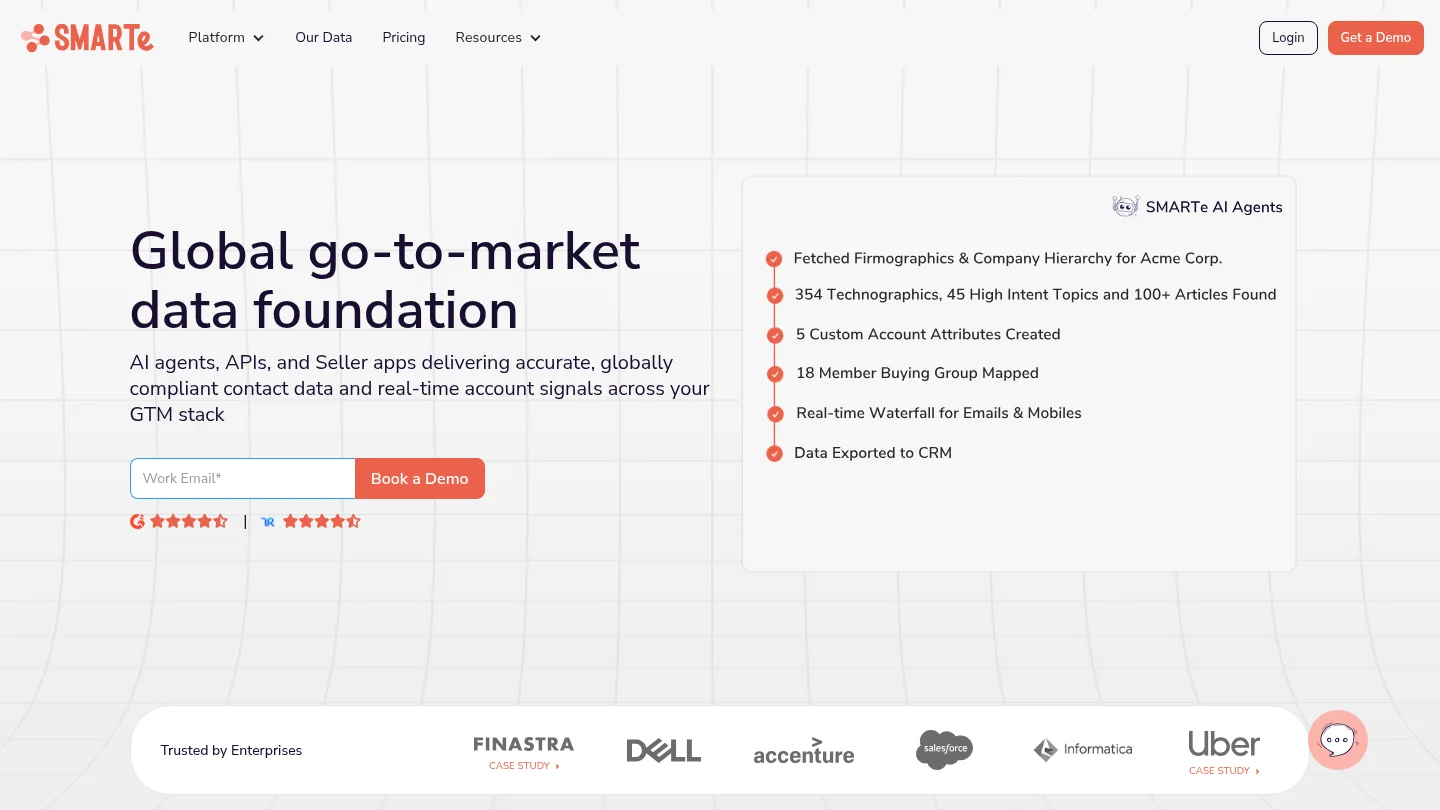
Best for: Consultants building B2B target lists who need contact research and company signals across markets.
SMARTe describes its platform around company and contact data, phone coverage, and signals that can help teams prioritize accounts. That makes it a relevant option when your immediate challenge is finding people and businesses that match a defined audience. Signals can help you decide which accounts deserve closer attention before you begin outreach.
Pros
- Combines contact research with company information and signals, supporting a more informed prospect shortlist.
- Its stated international coverage may be useful when your client base or target accounts cross borders.
- Contact-focused research can complement a consultant’s own positioning and campaign planning.
Cons
- The described strengths center on company and contact data. Plan time to connect each signal to your own service fit and message.
- Check current plan terms and test coverage against your specific industries, roles, and countries before committing.
3. Crunchbase
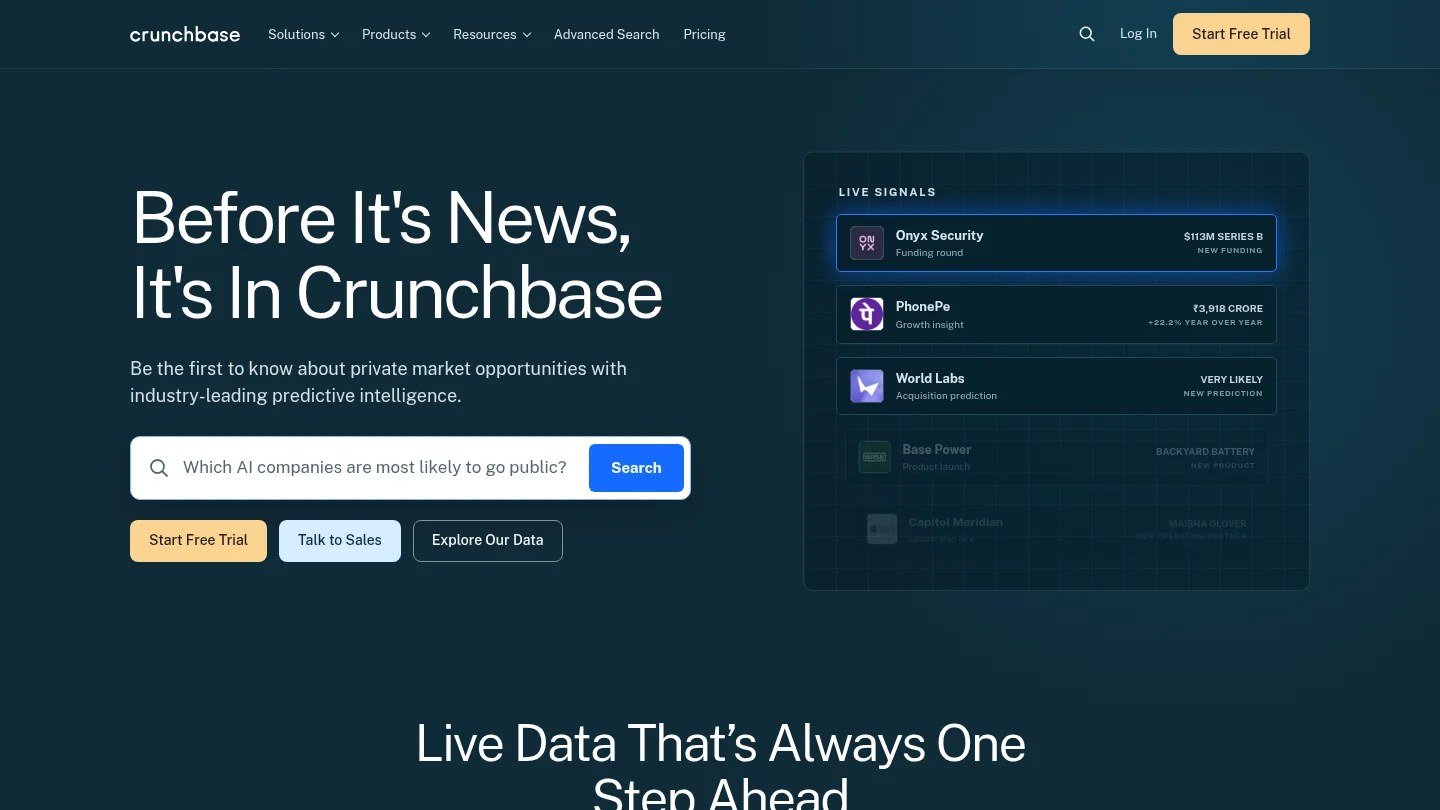
Best for: Consultants who target startups and other private companies and want to notice funding or company lifecycle events.
Crunchbase focuses on private-company information and events such as funding, acquisitions, and other changes in a company’s lifecycle. Those signals can help you find businesses to investigate or time a conversation around a visible change. They do not, by themselves, establish that a company has a marketing problem your service can solve.
Pros
- Funding and company activity provide useful context for researching private businesses.
- Company profiles and lifecycle signals can help narrow a broad market into accounts worth checking.
- Event-based research may help you form a timely, evidence-led opening for a conversation.
Cons
- A company event is not a verified marketing need or buying decision; you must qualify the opportunity.
- Plan a separate step to identify and verify the right contact and prepare your message.
4. ZoomInfo
Best for: Marketing consultants working with larger B2B teams that need company and contact intelligence alongside go-to-market workflows.
ZoomInfo combines business and professional contact research with company intelligence and sales or marketing capabilities. This breadth can help when prospecting is part of a larger client or team workflow, rather than a solo consultant’s standalone research routine. Its packages are sales-quoted, so you will need to confirm the price and included features for your use case.
Pros
- Company and contact research can sit alongside broader go-to-market capabilities.
- Intent and company signals can add context to account prioritization.
- Its wider feature set may suit consultants contributing to an established sales or marketing operation.
Cons
- Sales-quoted pricing makes it harder to compare costs without speaking to the provider.
- The broader platform may exceed the needs of consultants looking mainly for a daily, service-specific shortlist.
5. Similarweb
Best for: Consultants whose ideal clients are online businesses and whose services relate to digital performance or market position.
Similarweb’s Sales Intelligence combines contact discovery with digital-market context, including information that can help you examine companies’ online activity. That can be useful when you want to build a shortlist around digital presence or compare businesses in a market. Its individual Sales Intelligence tier is listed at $129 per month with annual billing, for one user.
Pros
- Digital-market context can help you research online businesses before approaching them.
- Contact discovery gives consultants a route from company research toward identifying people to review.
- The individual tier has a published price, making initial budgeting more straightforward.
Cons
- Website activity is a digital-market signal, not proof that a company needs or intends to buy marketing services.
- You still need to assess service fit and build a relevant outreach angle from the data.
How should you choose among these platforms?
Start with the research bottleneck, not a feature list. If you need names and contact details, prioritize contact coverage and verification. If you need to understand why a business may be a fit, prioritize source-backed company research and signals that relate to your service.
For U.S. market context, Census Business Builder provides selected demographic, economic, and business data by location and industry. Its data is useful for understanding markets, but it does not identify individual companies for prospect outreach. Use Census Business Builder to add context to your research, not as a contact database.
Check whether signals are specific enough to support your offer. A funding announcement, hiring change, or rise in online activity can suggest a reason to investigate, but it cannot confirm a company’s need. Consultants serving a narrower niche can also ask whether each signal maps to their expertise. For an AI and automation specialty, our overview of lead research platforms for AI consultants explores that fit.
For example, a consultant serving law firms might use changes in a firm’s market or online presence to decide whether a conversation is timely. Relevant seo strategies can then inform the discussion, if search visibility is within the consultant’s scope.
Finally, review every source and contact before sending a commercial email. For U.S. messages, the Federal Trade Commission says CAN-SPAM applies to commercial email, including business-to-business messages, and describes requirements for accurate sender information, non-deceptive subject lines, and opt-out handling. Review the FTC’s CAN-SPAM guidance and account for other applicable rules when contacting people internationally.
Conclusion
The right lead research platform depends on whether your priority is service-fit research, contact data, digital-market context, or private-company signals. ProspectDog is the most directly tailored option here for consultants who want a daily brief shaped around their offer, with evidence and outreach drafts to review. If you need contact coverage or a specialized market signal, compare those capabilities against your actual prospecting workflow and budget.
Build a More Consistent Prospecting Routine
When research takes too long, it can be difficult to keep prospecting consistent while delivering work for clients. A focused shortlist can help you spend less time searching and more time deciding which companies deserve a thoughtful conversation.
We shape daily research around your service, expertise, ideal client, and market. Each brief includes researched companies, reasons they may need your service, sources to review, suggested outreach, and practical conversation tips. You review and qualify each prospect, verify contacts, personalize drafts, and send messages yourself. Get one researched brief after signup without a card, or choose Starter at $49 per month for up to 10 requested leads daily or Pro at $99 per month for up to 20. Eligible accounts can start a seven-day trial with a payment method. Get a researched lead brief for your consulting service.
Frequently Asked Questions
What is lead research software for marketing consultants?
It helps consultants identify companies that may fit their services and gather context for deciding whether to reach out. Depending on the platform, it may focus on company research, contact information, market signals, or outreach preparation.
Do these platforms verify contact details?
Contact coverage and verification vary by provider and plan. ProspectDog researches companies and prepares drafts, but you are responsible for finding or verifying the right contact before sending.
Are funding or website activity signals proof that a company needs marketing help?
No. These signals can give you a reason to investigate, but they do not confirm buying intent or a specific service need. Review the evidence and qualify the company against your offer.
Which platform may suit an independent consultant?
If you work independently, compare the time needed to research, qualify, and contact each prospect with the support the platform provides. Our article on lead research software for independent consultants considers that workflow.
What should I check before sending research-led outreach?
Review the source, confirm that the company fits your offer, and verify the recipient and contact details. Personalize your message and follow the email and privacy requirements that apply to your location and recipients.