

Among the top 5 lead research platforms for AI consultants in 2026, ProspectDog is the closest fit for solo practices that want research shaped around their offer and ideal client. Our lead research software for independent consultants connects company research to possible service needs and prepares drafts for your review. That is useful when you want a practical routine, not a sales department’s full data stack.
For context, U.S. businesses’ reported AI use hovered between 17% and 20% in Census Bureau survey data collected from December 14, 2025, to May 3, 2026. This is business adoption context, not evidence that a particular company is shopping for AI consulting. The Census Bureau survey also covers businesses broadly, not AI consultants’ target clients specifically.
Choose by research signal, not the AI label
If a platform flags a company, you still need to understand why the signal matters to your service. Check whether it shows source evidence, supports your target profile, and leaves you in control of qualification and outreach. NIST’s voluntary framework emphasizes clear human roles and documented oversight when managing AI risks; that is useful context when reviewing automated scores. NIST AI RMF guidance is not a certification for lead research platforms.
| Rank | Platform | Research approach | Outreach role |
|---|---|---|---|
| 1 | ProspectDog | Service-fit research with a source and possible need | Suggested drafts for you to review and send |
| 2 | Signado | LinkedIn posts and comments matched to an ideal client profile | Drafts and sending through your chosen channel or tools |
| 3 | SyncGTM | Multi-source enrichment, company signals, and research agents | CRM and sequencing integrations for outbound workflows |
| 4 | Business and contact data with extensive signal coverage | Data infrastructure for research and agent workflows | |
| 5 | Contact and company database with buying signals | Prospecting and outreach in a sales-focused workspace |
1. ProspectDog
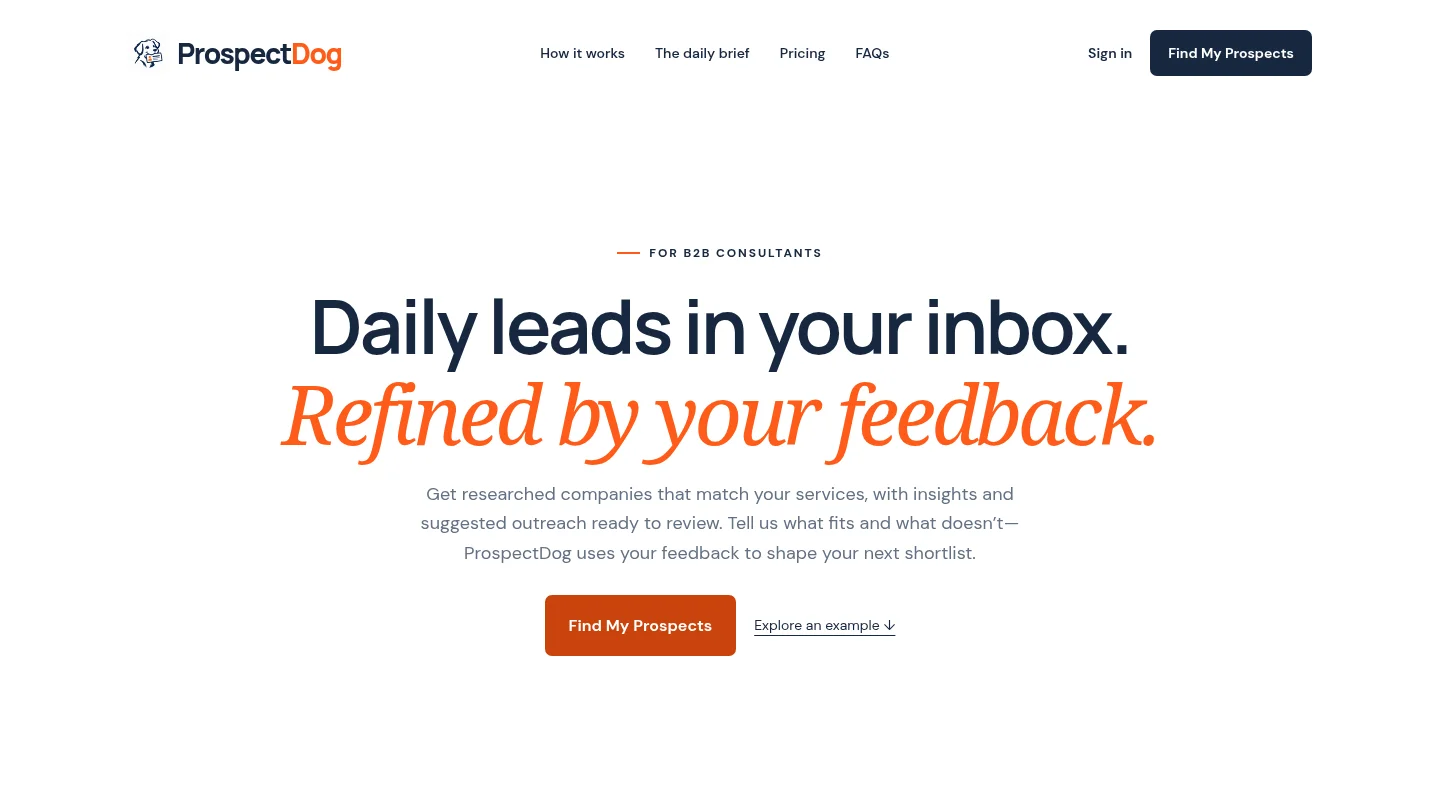
Best for: Independent AI consultants who want company-fit research connected to their services, ideal clients, and market.
We shape each daily brief around the consultant’s offer and profile. Leads include a source to review, a possible reason the company may need the service, and an outreach draft with practical tips. Feedback about which companies fit can help shape subsequent shortlists. This makes the platform a good match when you want service-fit signals, rather than an undifferentiated list of contacts.
Our free first researched brief is available after signup without a card. Ongoing research and dashboard access are available through Starter at $49 per month for up to 10 requested leads in one daily brief, or Pro at $99 per month for up to 20. These are requested amounts, not guarantees that every brief will contain that many relevant companies. For more on daily lead research for consultants, consider how many prospects you can realistically qualify and contact.
Pros
- Research is shaped around your AI consulting service, expertise, ideal client, and market.
- Briefs connect a potential need to a source, so you can review the evidence before deciding whether to reach out.
- The free first brief lets you assess the research before paying for ongoing access.
Cons
- The workflow is human-led: you qualify prospects, find or verify contacts, personalize drafts, and send messages yourself.
2. Signado
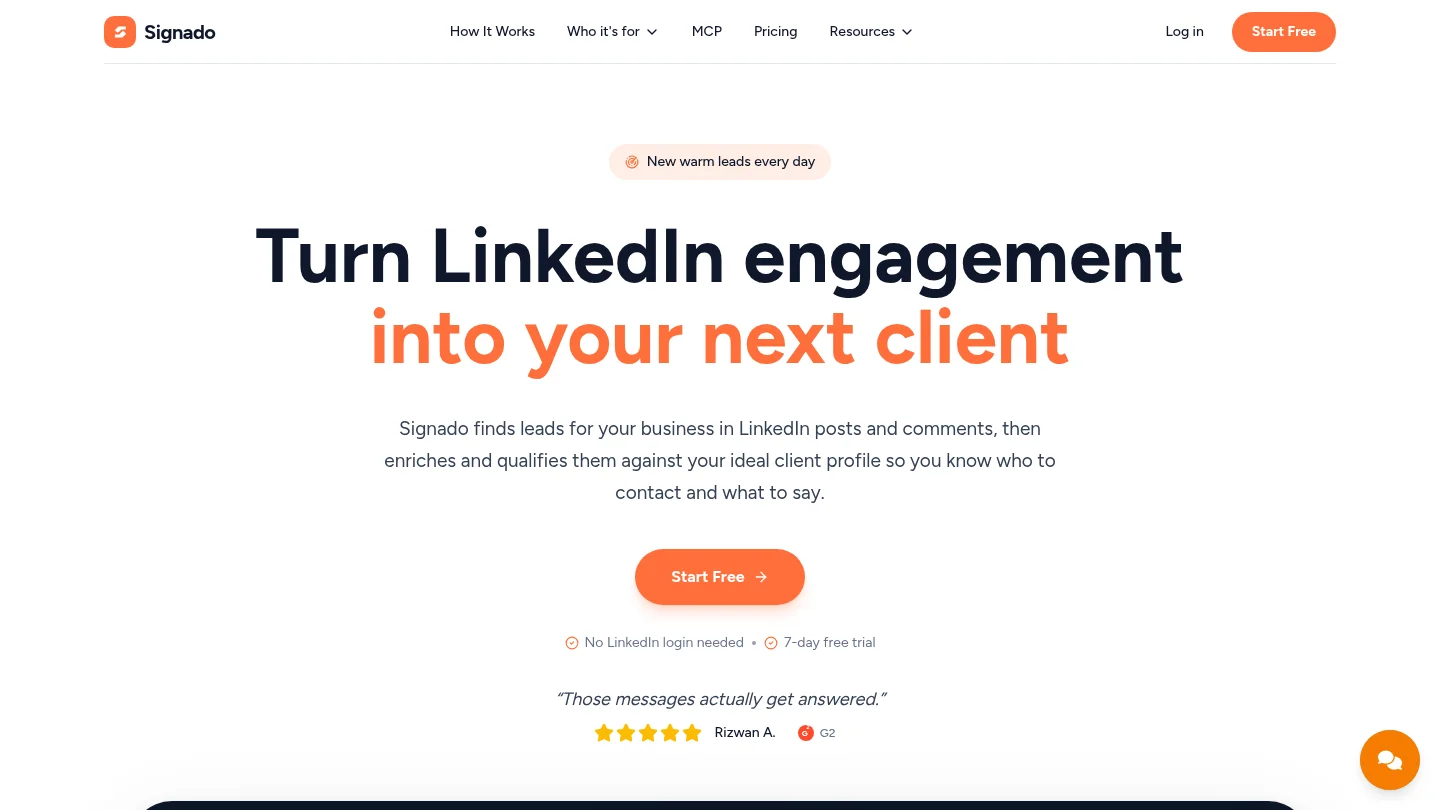
Best for: Consultants selling AI, marketing, or go-to-market services who find useful prospects through LinkedIn activity.
Signado looks for people and companies in LinkedIn posts and comments, then checks their fit against your ideal client profile. A prospect’s original words can give you a relevant opening for a message, rather than relying only on a company-level signal. Its plans start at $29 per month, with a seven-day trial that requires a payment method.
Pros
- It suits consultants whose potential clients discuss business problems or request help on LinkedIn.
- It keeps the relevant post or comment available as context for the fit assessment and suggested message.
- It can draft messages and route leads to email or outreach tools you choose.
Cons
- Its discovery depends on relevant LinkedIn activity, so it may be less useful when target clients rarely post or comment.
- It does not send LinkedIn messages on your behalf; you choose what to send and where.
3. SyncGTM
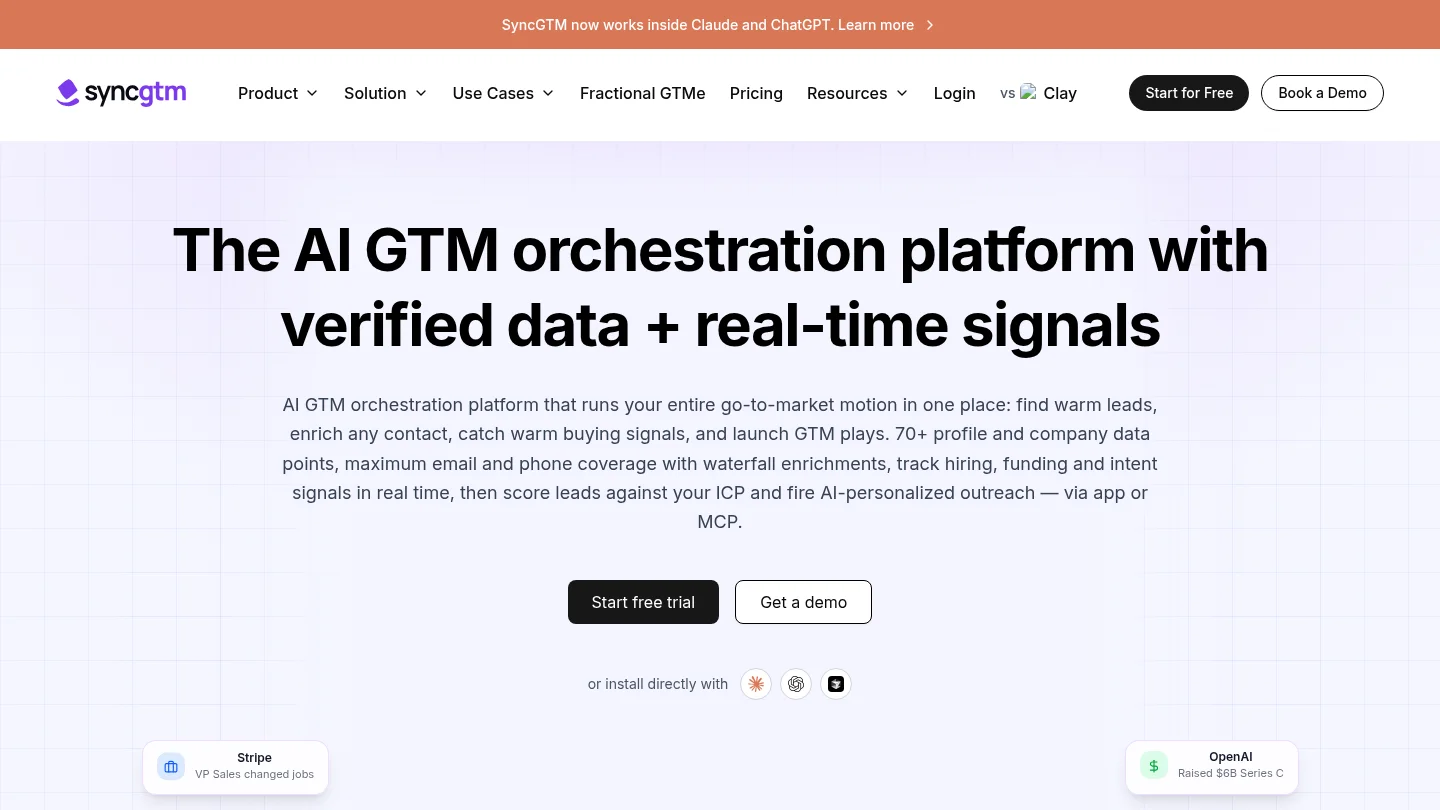
Best for: Consultants or small teams that want multi-source enrichment, signal monitoring, and connected go-to-market workflows.
SyncGTM combines company and contact data, enrichment, research agents, scoring, and integrations in a broader sales workflow. That breadth can help when you already have a defined target profile and want to connect research to CRM records or outbound tools. Its pricing page lists a Solo plan at $529 per year, billed yearly, with credit-based allowances. That makes it a more substantial investment than a service focused on a consultant’s daily shortlist.
Pros
- Multi-source research and enrichment support more detailed account and contact workflows.
- Signals, scoring, and integrations can reduce handoffs for users who already operate a structured outbound process.
- It can suit consultants who want to build repeatable workflows around their data and CRM.
Cons
- The annual Solo price and credit system may be more than a solo consultant needs for a modest prospecting routine.
- Its wider workflow scope can require more setup than a service that starts with the consultant’s offer and ideal client.
4.
Best for: Data-oriented consultants building customized account research or AI agent workflows.
Explorium positions its offering as business data and infrastructure for go-to-market teams and AI agents. Its site lists 146 million business entities, 767 million professional profiles, and more than 4,000 signals. Natural-language inputs and custom signals can help narrow a broad market to accounts that match a defined profile. This is a flexible route when you want to assemble a tailored research workflow, rather than receive a ready-made consultant brief.
Pros
- Broad company, contact, and signal coverage supports custom account discovery.
- Its data infrastructure is designed to support both human users and AI agent workflows.
- Customized signals can be useful when a standard industry or company-size filter is not specific enough.
Cons
- Its data and infrastructure focus may require you to build more of the research and outreach process yourself.
- Before choosing it, clarify which data, signals, and workflow components your use case requires.
5.
Best for: Consultants who want contact discovery, company research, and outreach functions in a sales-oriented workspace.
Apollo combines a B2B contact and company database with prospecting tools, buying signals, and outreach workflows. Its website lists more than 240 million contacts and 30 million accounts. That scale may help when contact discovery is a major part of your work, though a broad database does not replace checking whether a company has a specific need for your AI service.
Pros
- Contact and company discovery can support a consultant who already knows the roles and organizations to target.
- Buying signals and outreach features bring research and sales activity into one workspace.
- Its broad database can suit consultants prospecting across several industries or markets.
Cons
- Its sales-oriented workflow may be broader than a solo consultant needs when the main task is researching service-fit opportunities.
- Database coverage alone does not establish buying intent or confirm that a contact is the right person.
How to test a platform before you commit
Use one real target profile to compare the research depth of each shortlist. Ask whether you can trace each suggested reason to an original source, distinguish a company signal from buying intent, and verify contact details independently. Keep your own criteria consistent, such as industry, company size, hiring or expansion activity, and the connection to your specific AI offer.
Then test the human work that remains. Does the tool stop at research, prepare a draft, connect to your outreach system, or send messages? These are different levels of automation. A focused trial can help you decide whether lead research software is worth it for your workload, rather than paying for features you will not use.
Keep qualification and outreach under your control
A hiring announcement or expansion can suggest a possible need, but it does not prove that a company is buying consulting services. Review the source, decide whether the signal connects to your offer, and confirm the recipient before personalizing your message. This step protects the quality of your outreach and helps you avoid treating an automated score as a decision.
For U.S. commercial email, the FTC explains that the CAN-SPAM Act also covers business-to-business messages. Its guidance addresses accurate sender details, truthful subject lines, a physical postal address, and a clear way to opt out. Read the FTC CAN-SPAM guide and check the applicable rules for other markets before sending internationally.
Conclusion: Match the platform to your consulting workflow
The right choice depends on whether you need service-fit research, LinkedIn conversation discovery, large-scale data, or a combined sales workflow. For an independent practice, lead research shaped around your AI service can make qualification more practical than starting with a broad contact list. Whatever platform you choose, review the evidence, verify the contact, and make the final outreach decision yourself.
Build a more consistent prospecting routine
For an independent AI consultant, useful prospect research should connect a company’s situation to the service you provide. A clear source and a relevant draft can help you assess that connection before investing time in outreach.
We help B2B consultants research companies that may fit their services, review the supporting sources, and prepare outreach drafts and conversation tips. Get one free researched brief after signup, with no card required. For ongoing research and dashboard access, Starter is $49 per month for up to 10 requested leads in one daily brief, and Pro is $99 for up to 20. You review each signal, verify the right contact, personalize the draft, and send it yourself. Get your free researched brief.
Frequently Asked Questions
What does a lead research platform do for an AI consultant?
It helps identify companies that may fit your service and gathers information that can support a relevant conversation. Depending on the platform, it may also help find contacts, prepare messages, or connect research to outreach tools.
Which platform is a good fit for an independent AI consultant?
ProspectDog is designed around a consultant’s service, expertise, ideal client, and market. Signado may suit consultants who want to find prospects through relevant LinkedIn posts and comments.
Do lead research signals prove that a company is ready to buy?
No. Hiring, expansion, or online activity can suggest a possible need, but none proves buying intent. Review the source and qualify each prospect before contacting anyone.
Will these platforms send outreach automatically?
That depends on the platform and workflow. ProspectDog provides drafts for you to review and send, while other tools may connect research with email or sales engagement systems.
What should I check before sending commercial email in the United States?
The FTC says CAN-SPAM applies to commercial business-to-business email and outlines requirements such as accurate sender information, truthful subject lines, and an opt-out method. Review the FTC’s email compliance guidance and consider the rules that apply in each recipient’s market.