


The practical answer to how to get consulting clients on LinkedIn is to connect one clear offer with buyer-specific evidence and consistent conversations. A profile view or connection is not a client. If you are choosing a research workflow, compare using LinkedIn Sales Navigator for consultant prospecting with a dedicated research process before scaling outreach.
LinkedIn is useful at several stages: helping buyers discover you, showing how you think, and giving you a way to approach relevant people. Its 2024 management consulting buyer survey covered buyers in the United States, Europe, and Australia. It describes larger buying groups, longer processes, and buyers researching multiple suppliers, so your profile should speak to more than one decision-maker.
What should a prospect understand from your profile?
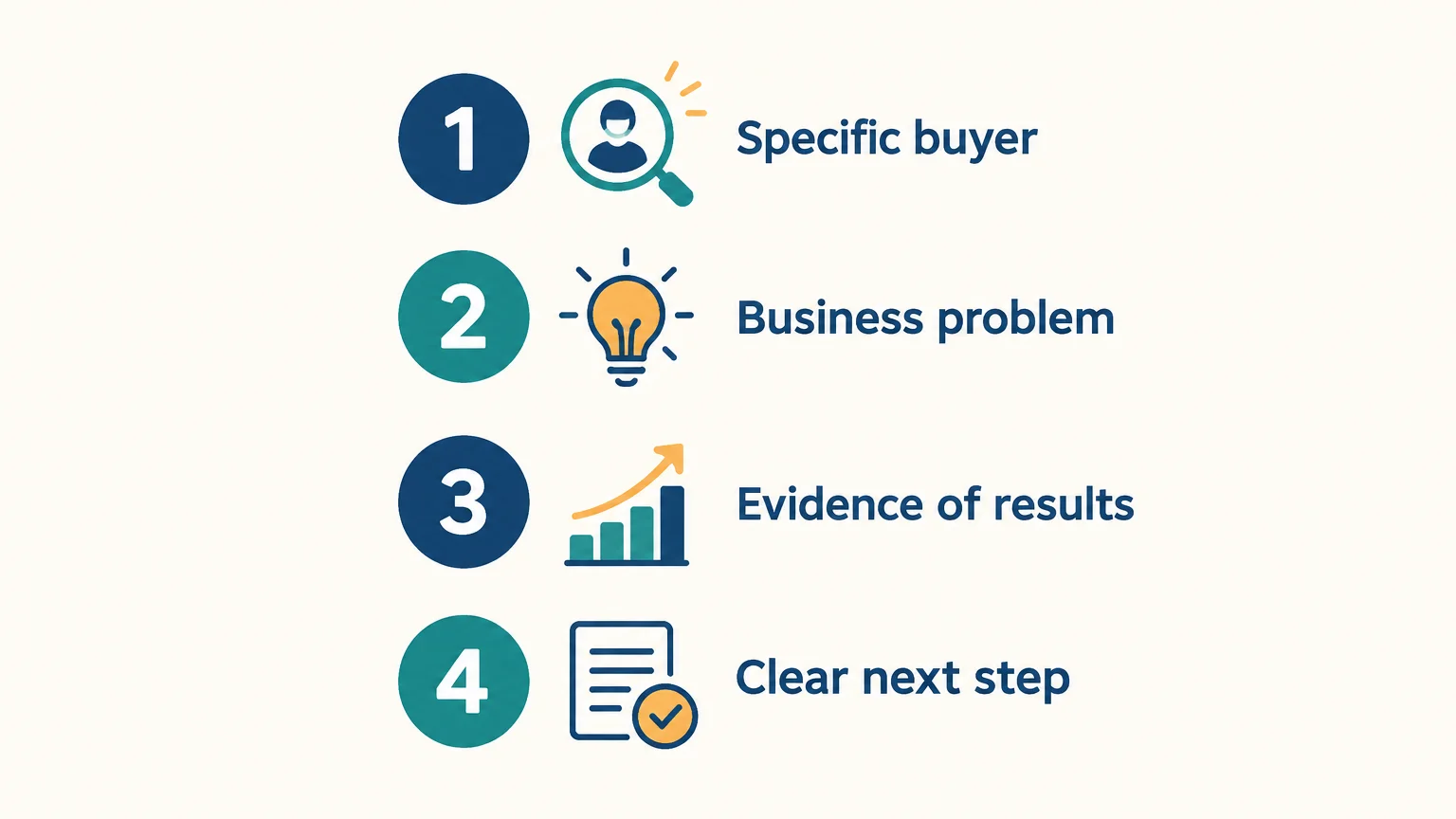
Imagine a founder opens your profile after seeing a comment or connection request. Within seconds, they should be able to tell whether you understand their problem and what kind of result you help create. A headline such as “Operations consultant” names a category, but not the value a buyer should associate with you.
Use a problem-led headline that identifies the type of client, the issue, and your approach. For example: “Helping growing ecommerce teams reduce support backlogs through service operations and automation.” In your About section, explain the situations where your work is relevant, how you assess them, and what evidence supports your approach.
Use experience descriptions to show outcomes rather than list responsibilities. Add a short case study or recommendation when you have permission to share it. Keep client names and sensitive details private unless disclosure is authorized. Make your contact route and a modest next step easy to find, such as inviting a relevant person to ask a question or compare approaches.
A clear profile also improves the quality of your outreach. When someone checks your background after receiving a message, the profile should confirm the same expertise and buyer problem described in your note. This alignment makes your positioning easier to understand without relying on a large follower count.
Which companies have a reason to talk now?
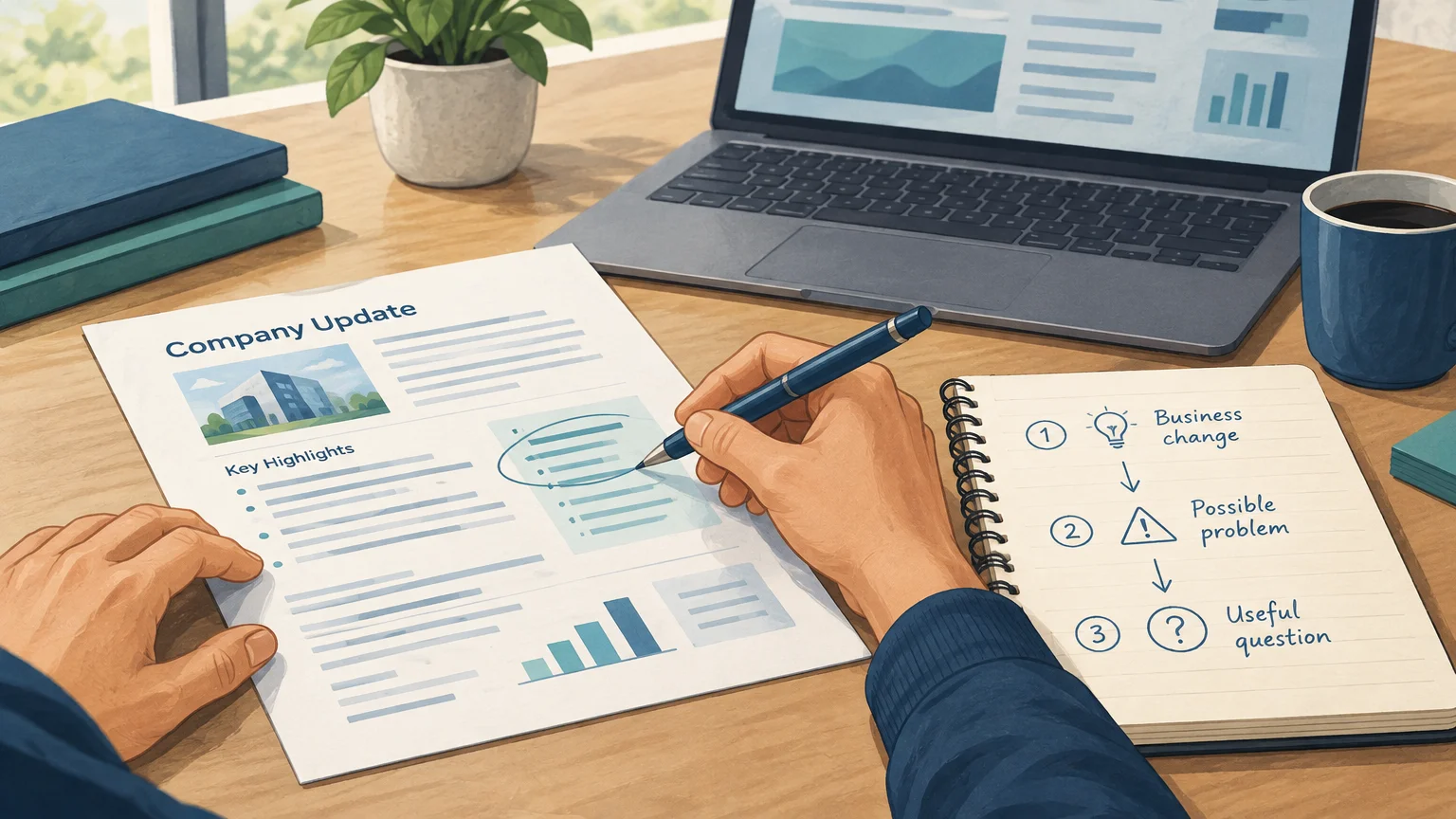
Start with a short list of organizations that fit your service, then look for a credible reason to prioritize one of them. A hiring push, expansion, leadership change, or public discussion of an operational problem can suggest that a relevant need exists. It does not establish buying intent, so treat it as a lead for investigation rather than a conclusion.
For each company, write down three things: what changed, why that change could connect to your service, and what you still need to verify. For instance, an ecommerce business hiring several customer-support staff could be relevant to a consultant who improves support operations. The hiring signal is a prompt to check the company’s actual situation, not proof that it wants automation help.
Then identify who is likely to understand the problem and who can authorize a project. Depending on the service, those may be different people. Look at their responsibilities, recent public comments, and the language they use to describe the challenge. This is more useful than sending the same message to every senior title.
To reduce manual company discovery, our daily research briefs identify potential B2B matches, explain the possible service fit, and provide source evidence for your review. They do not verify buying intent or send LinkedIn messages. For a wider look at the category, see our prospect research tools for consultants.
How do you use your network before a pitch?
Begin with people who already know your work: former colleagues, clients, delivery partners, and industry peers. Tell them what type of organization you help and what problem you solve. Ask whether they know someone facing that situation, rather than asking broadly for “any leads.” A precise request is easier to recognize and pass along.
Do not limit your network to close contacts. A 2022 account of large LinkedIn experiments on job mobility reported that moderately weak ties could help people reach new opportunities. That research concerns job changes, not consulting sales, but it supports a practical distinction: relationships outside your immediate circle can introduce you to different companies and perspectives. See the report on LinkedIn networking research.
Build those connections through useful participation. Follow people who work in your target market, comment when you can add a specific insight, and respond thoughtfully when someone describes a problem you understand. Do not turn every exchange into a pitch. The aim is to become a relevant, recognizable person before a project need becomes urgent.
This is LinkedIn lead generation for consultants as relationship-building, not just list-building. If someone introduces you, thank them, explain your relevance briefly, and let the prospect decide whether a conversation is useful. Keep the ask small and connected to the problem they have actually described.
What should you publish so buyers remember you?
Publish material that lets a potential client see how you diagnose a problem. A short analysis, a decision checklist, or an anonymized project lesson can show your thinking more clearly than a general announcement about your services. Use examples from your work only when you have permission and have removed identifying details.
A useful post structure is simple: describe a recognizable business situation, explain the likely cause or trade-off, then offer one practical question or next step. For example, an operations consultant might explain why adding staff does not always resolve a handoff bottleneck, then suggest a way to inspect where work is waiting. This gives readers something to use and reveals how you approach the issue.
In 2026, a mixed-methods study examined LinkedIn posts using engagement measures such as reactions, comments, and reposts. Those measures can show attention, but they do not demonstrate that a post produced consulting revenue. Review the 2026 LinkedIn posting study, and judge your content by whether it attracts relevant conversations, not by reactions alone.
Choose a sustainable publishing rhythm instead of chasing an arbitrary posting quota. Keep a short record of the topics that lead to thoughtful replies, profile visits from relevant buyers, or useful introductions. Over time, this helps you refine your LinkedIn marketing for consultants around the problems your audience actually recognizes.
How do you turn a connection into a qualified conversation?
Personalize the first message with one accurate observation and one low-pressure question. For example: “I saw your team is hiring for customer support roles. Are you also reviewing how support requests move between teams?” That opening invites the recipient to share context. It does not presume they need your service or push them to book a call before they are ready.
Keep the message concise, and avoid a biography, a menu of services, or a generic claim that you can help. Mention a relevant result only if it is true, appropriate to share, and connected to the recipient’s situation. If there is no response, follow up once with a useful addition or a polite close, then stop unless they re-engage.
When a person replies, listen before proposing a project. Ask how they currently handle the problem, what they have already tried, and what a useful outcome would look like. A short discovery conversation can establish whether the issue fits your expertise, whether the timing is right, and whether both sides want to discuss next steps.
For help preparing a message while keeping review and sending in your hands, explore our outreach preparation for consultants. Research and draft suggestions still need your judgment: verify the contact, check the source, personalize the wording, and send it yourself.
What should you measure and improve?
Measure movement toward a real sales conversation, not activity for its own sake. Track relevant profile visits, replies from your target audience, qualified conversations, introductions, and proposals. Record the source of each conversation, such as a post, comment, referral, or direct message, so you can see which actions are producing useful progress.
If a message gets little response, check the list and the offer before rewriting every sentence. Are the recipients connected to the problem? Does your profile support the promise? Does the opening refer to something specific and accurate? Change one element at a time, then review what happens across a reasonable group of prospects.
Build a simple weekly routine: review company signals, engage with a few relevant discussions, publish or refine one useful insight, and follow up with people who have already shown interest. Our overview of B2B lead generation strategies and tools can help you consider where research fits into that routine. Keep the prospect relationship personal, even when you use tools to organize your work.
Turn visibility into relevant conversations
LinkedIn works best when your offer, profile, research, and outreach all point to the same buyer problem. Define whom you help, look for evidence that the problem may be timely, and contribute something useful before making a direct ask. Then qualify replies carefully and learn from the conversations that progress. That is a practical way to find consulting clients on LinkedIn without treating likes or connection counts as sales results.
Make prospect research a repeatable part of your routine
Finding relevant companies takes attention, especially when you are also delivering client work. A research brief can help organize potential matches and the evidence behind them, while leaving prospect qualification and outreach in your hands.
Our briefs include researched companies, possible reasons they may need your service, source information, suggested outreach drafts, and conversation tips for you to review. A free researched brief is available after signup without a card. Starter provides up to 10 requested leads in one daily brief for $49 per month; Pro provides up to 20 for $99 per month. Eligible accounts may start a seven-day trial with a payment method, followed by monthly renewal unless canceled before the trial ends. We do not send LinkedIn messages or prospect emails. Request a free researched prospect brief, then review the evidence, verify the right contact, personalize your message, and send it yourself.
Frequently Asked Questions
How do consultants get their first client from LinkedIn?
Start with people who already know your work, then make your offer specific enough for them to recognize a relevant introduction. Use your profile and a useful example of your work to support the first conversation.
Do you need a large following to find clients?
No. A focused network of relevant buyers and referral partners is more useful than a large audience with little connection to your service. Prioritize meaningful conversations and clear expertise over follower counts.
How often should consultants post on LinkedIn?
Choose a rhythm you can maintain while delivering your work, and prioritize useful, specific posts over volume. Review whether your content leads to relevant replies or conversations rather than relying only on reactions.
Should you send a sales pitch with a connection request?
Keep the initial connection request brief and relevant, without treating acceptance as permission for an immediate pitch. Once connected, refer to a specific business context and ask a respectful question.
Can ProspectDog send LinkedIn messages for me?
No. Our service researches potential companies and provides evidence, suggested outreach drafts, and conversation tips for your review. You remain responsible for qualifying prospects, verifying contacts, personalizing messages, and sending outreach yourself.