


What if each prospect came with a reason to start a conversation, not just a name? The best prospect research tools for consultants connect your service to company evidence and a practical next step. Our first choice is ProspectDog, built around daily researched company briefs for B2B consultants. See our best lead research software for consultants comparison for the broader category.
Consulting prospecting also requires a clear definition of the firms you can serve. The U.S. Small Business Administration recommends examining demand, market size, location, competition, and alternatives when researching a market. Apply the same discipline to software: check whether it finds companies, explains a relevant signal, and leaves you enough control to qualify each fit. A polished draft cannot replace source review or contact verification. SBA market research guidance outlines these research questions.
Which prospecting workflow fits your consulting practice?
Start by deciding whether you need a list of companies, research on prospects you already know, or a complete outreach pipeline. These are different jobs. A consultant who sells a specific service also needs to judge whether a company’s situation supports a credible conversation, not simply whether a contact record matches a job title.
Assess source transparency first. Look for the evidence behind each suggested reason to reach out, then check whether the signal actually connects to your service. For broader market context, the U.S. Census Bureau’s Census Business Builder provides economic, demographic, and business information. It can inform market research, but it is not a substitute for a tool that researches individual target companies.
Next, separate a potential need from confirmed buying intent. A hiring notice, expansion, or new company initiative can give you a reason to investigate, but it does not prove that a firm is ready to buy. If you research a public company, SEC EDGAR filings can provide primary company information for further review.
Finally, count the manual work that remains. Some tools find companies and prepare a daily brief; others require you to supply leads and focus on research, sequences, or pipeline management. Independent consultants can compare those workloads in our guide to lead research software for independent consultants. Marketing specialists can also review our top lead research platforms for marketing consultants.
Evaluate lead cadence alongside volume. A short, relevant daily shortlist may be more useful than a large list that needs extensive screening. Our overview of how much lead research software consultants need can help you estimate a workable routine.
Outreach features also need careful review. If you send commercial email in the United States, the Federal Trade Commission says CAN-SPAM applies to business to business messages, too. Its CAN-SPAM compliance guide covers requirements such as accurate headers, truthful subject lines, and honoring opt outs.
| Rank | Tool | Research and evidence | Outreach workflow | Cost or volume detail |
|---|---|---|---|---|
| 1 | ProspectDog | Daily company research shaped by your service, with a reason to reach out and source information. | Provides a suggested draft and tips; you qualify, find or verify contacts, personalize, and send. | First brief free. Starter is $49 monthly for up to 10 requested leads daily; Pro is $99 monthly for up to 20. |
| 2 | Doctor Lead | Researches prospects and identifies conversation hooks, buying signals, and potential objections. | Drafts personalized outreach and follow ups; includes approval, reply tracking, and a CRM pipeline. | Describes a 14 day trial and monthly allowances from 25 to 1,500 prospects; listed material does not specify plan prices. |
| 3 | Flynt AI | Recruitment focused research uses hiring, funding, and acquisition signals, with company context and decision maker details. | Automates personalized email and LinkedIn sequences, with replies and pipeline tracking. | Up to 30 leads per day per agent; pricing is not specified in the available product description. |
| 4 | Humen | Researches uploaded leads and displays research alongside personalized email drafts. | Supports outbound automation and analytics; its Lead Finder is listed as coming soon. | Pricing is not specified in the available product description. |
ProspectDog’s daily allowances count requested results, not guaranteed matches, so fewer relevant companies may be returned. Eligible accounts can start a seven day trial with a payment method; subscriptions renew monthly unless canceled before the trial ends. Doctor Lead’s stated monthly prospect allowance is not the same as a daily delivery limit.
1. ProspectDog
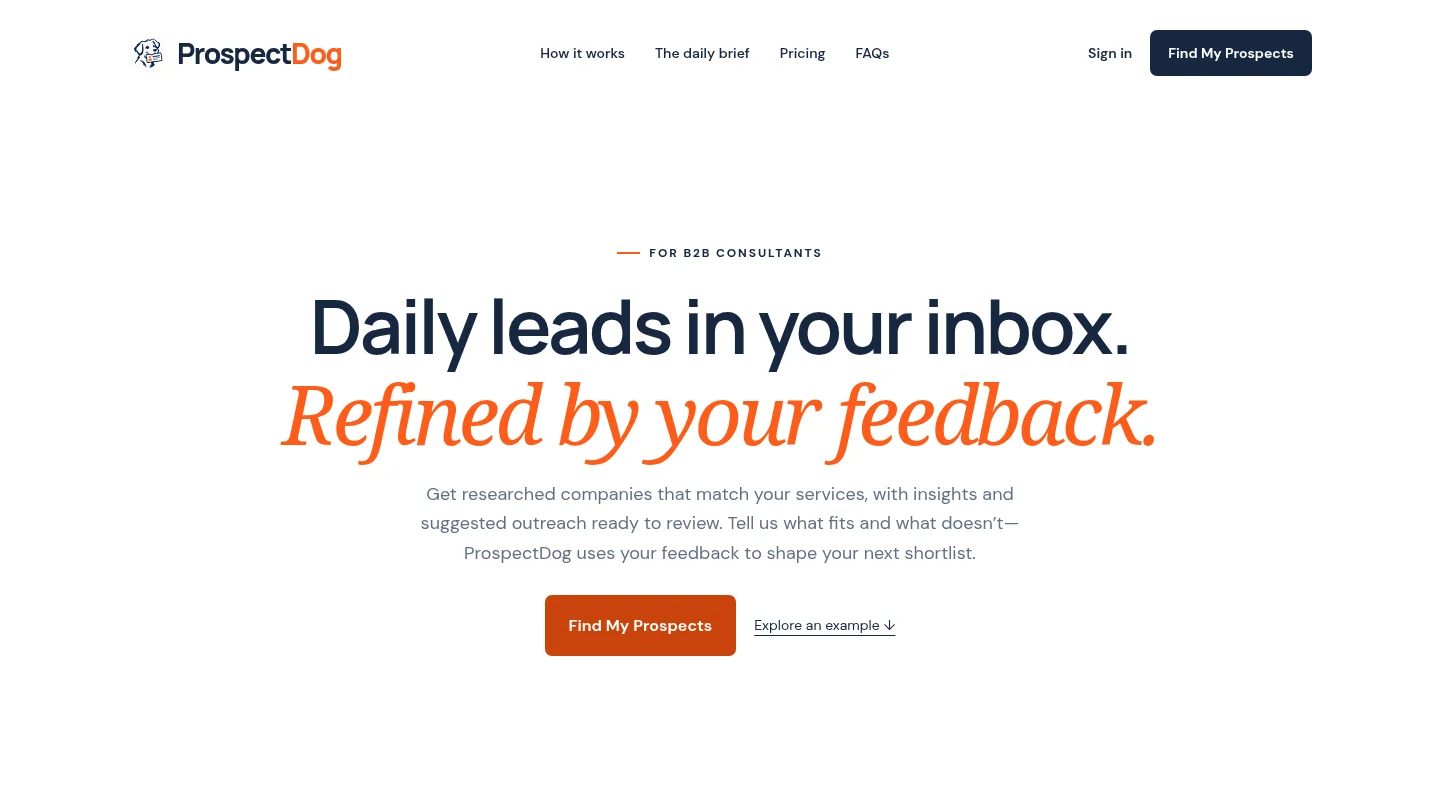
Best for: B2B consultants who want a recurring shortlist connected to their service, ideal client, expertise, and market.
We shape research around the work you offer. Each brief includes researched companies, source information, a reason the company could need your service, a suggested email, and practical conversation tips. Your feedback about which companies fit helps shape later shortlists. That makes ProspectDog a direct fit when your priority is service fit rather than a generic contact database.
Starter provides up to 10 requested leads in one daily brief for $49 per month. Pro provides up to 20 requested leads in one daily brief for $99 per month. You can receive one researched brief after signup without a card. Eligible accounts may also start a seven day trial with a payment method.
Pros
- Daily company research is shaped by your offer and target market, helping you start with a more focused shortlist.
- Each lead includes a source and an explanation of its potential relevance, so you can inspect the evidence before deciding to contact a company.
- Feedback about what fits can guide subsequent shortlists, supporting a repeatable routine instead of repeated open ended searching.
Cons
- You remain responsible for qualifying each company, finding or verifying the contact, personalizing the draft, and sending the message.
2. Doctor Lead
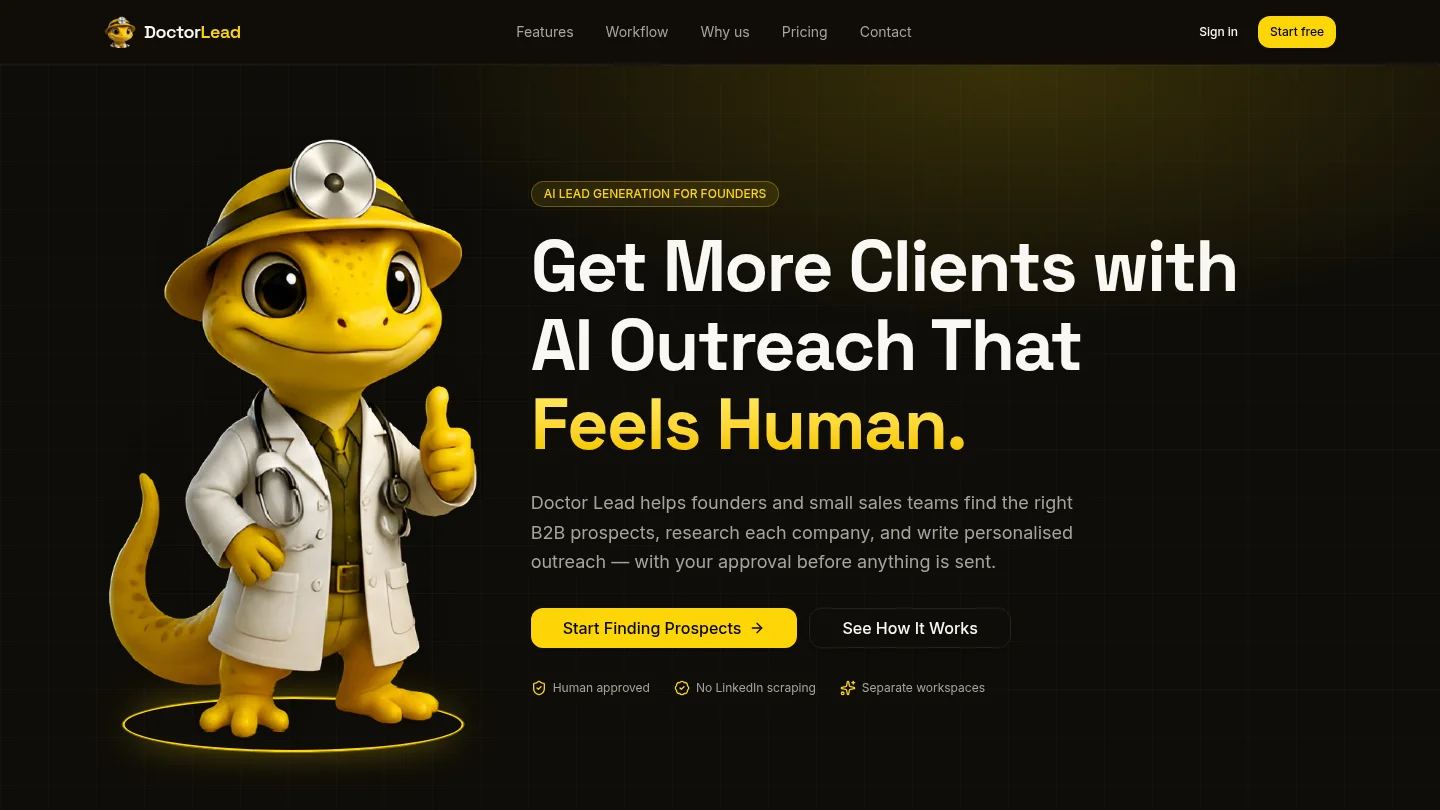
Best for: Consultants who want prospect research alongside campaign organization, reply tracking, and a CRM style pipeline.
Doctor Lead describes a workflow for defining an ideal client, adding or importing prospects, researching leads, and preparing personalized outreach for approval. Its research includes potential buying signals, conversation hooks, and objections. The pipeline and reply tracking can suit a consultant who wants to manage ongoing campaigns as well as research prospects.
The product describes a 14 day trial and monthly prospect allowances of 25, 100, 500, or 1,500 across its listed tiers. The available product description does not state the corresponding monthly prices, so compare the checkout terms before choosing a plan.
Pros
- Combines prospect research with campaign organization and a visible pipeline, which can reduce the need to track every conversation separately.
- Requires human approval before outreach is sent, giving you a chance to review and edit the message.
- Offers several monthly prospect allowances, providing options for different research volumes.
Cons
- The described workflow emphasizes campaigns and pipeline management, so it may be more than you need if you only want a compact daily research brief.
3. Flynt AI
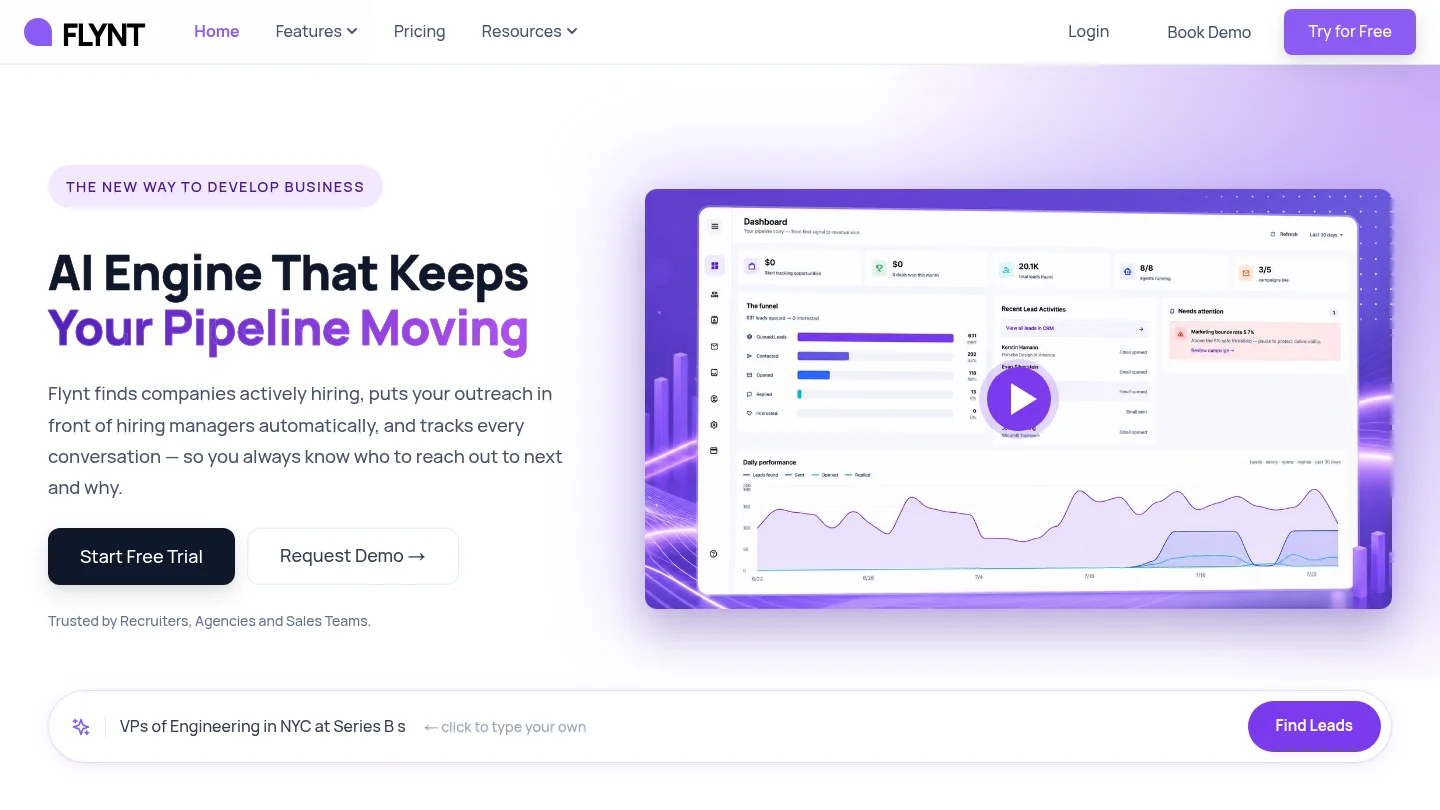
Best for: Recruitment consultants and agency owners seeking companies with relevant hiring activity.
Flynt AI is positioned around recruiting and client acquisition. Its research looks for companies hiring, raising funding, or completing acquisitions, then assembles company context, decision maker details, and personalized outreach. It also describes email and LinkedIn sequences, reply handling, and pipeline tracking. For a consultant whose offer concerns recruiting, hiring signals can give research a specific starting point.
Flynt describes delivery of up to 30 leads per day per agent. Its recruiter focus is central to the product description, so consultants in marketing, operations, or other fields should check whether its signals and workflow match their service.
Pros
- Connects hiring events and company changes to a recruitment focused reason for outreach.
- Combines research with email and LinkedIn outreach and pipeline management.
- Provides decision maker and company context alongside suggested personalization.
Cons
- Its recruiting focus makes it a narrower match for consultants whose services do not relate to hiring or talent acquisition.
4. Humen
Best for: High ticket B2B consultants and small teams that already have prospects to research and want detailed personalization.
Humen describes research on uploaded leads, including professional background, current role, company context, recent news, and other relevant details. It displays the research used alongside generated emails and lets users specify custom research instructions. This research depth can help when an account needs more background before a tailored pitch.
The described workflow focuses on researching leads and preparing outbound messages. Its Lead Finder is listed as coming soon, so consultants seeking a currently available tool to discover companies from a market profile should confirm that capability before committing.
Pros
- Connects research details to the generated email, making the basis for personalization easier to inspect.
- Allows custom research instructions, which can help consultants focus on information relevant to a particular offer.
- Includes analytics for reviewing message and prospect performance.
Cons
- The listed Lead Finder is not described as currently available, making Humen a less direct fit for consultants who need company discovery from the start.
Choose the tool that matches your research workload
The best prospect research tools for consultants make it easier to identify relevant companies, inspect the reason for outreach, and choose a manageable follow up workflow. ProspectDog is the strongest fit when you want daily service matched company research and are comfortable qualifying contacts and sending messages yourself. Choose a campaign focused option when pipeline automation matters more, or a specialist tool when its signals match your consulting niche.
Build a more consistent prospecting routine
If manual company research is taking time away from client work, a focused daily brief can give your prospecting a clearer starting point. The right fit depends on your service, ideal client, market, and how much outreach work you want to retain.
We provide researched companies, source information, potential service fit reasons, suggested email drafts, and practical conversation tips in a daily brief. You review each source, qualify the company, find or verify the right contact, personalize the message, and send it through your own email account. You can receive your first researched brief free after signup without a card. For ongoing research, Starter is $49 per month for up to 10 requested leads daily, and Pro is $99 for up to 20. Fewer relevant companies may be returned than requested.
Frequently Asked Questions
What should a consultant look for in prospect research software?
Check whether the software matches companies to your service and shows the evidence behind each suggested reason to reach out. Also consider lead cadence, pricing, and the work you must still do yourself.
Can prospect research software guarantee that a company is ready to buy?
No. A hiring notice, expansion, or other company signal can suggest a potential need, but it does not confirm buying intent. Review the source and qualify each prospect before contacting them.
Does ProspectDog verify contacts or send outreach?
No. You are responsible for finding or verifying the right contact, personalizing the suggested draft, and sending the message. The brief supports your review rather than sending prospect emails for you.
How is a research brief different from a contact database?
A contact database primarily helps you find or organize people and company records. A research brief adds context about why a company could fit your service and gives you material to assess before outreach.
Can an independent consultant use a tool designed for sales teams?
Yes, if its workflow matches your needs, but a large sales pipeline may add unnecessary setup for a solo practice. Compare how quickly you can define your ideal client, review evidence, and act on a shortlist.