


Would a small set of well-researched prospects serve you better than a large directory of names? The answer depends on the evidence, contact accuracy, and follow-up work you expect after discovery. For consultants, our B2B lead research software explains why company fit and a relevant reason to reach out can matter as much as list size.
Start with the kind of company you want to serve, not a vendor feature list. Define your service, ideal client, and market, then assess whether a tool supports those filters. The SBA market research guidance recommends analyzing competitors by product or service and market segment, a useful foundation for building a focused prospecting approach.
Which B2B lead generation tool fits your workflow?
If you are a consultant selling expertise, start with ProspectDog’s research-first brief. Choose Apollo for a bundled contact and outreach workflow, LinkedIn Sales Navigator for account relationships, or HubSpot for CRM-centered sales work.
| Rank and tool | Primary workflow | Evidence and review | Pricing approach |
|---|---|---|---|
| 1. ProspectDog | Daily company research for B2B consultants | Sources, service-fit rationale, drafts for your review | Free first brief; Starter $49/month or Pro $99/month |
| 2. Apollo | Contact and account prospecting with sales engagement | Contact and company data, enrichment, sequences | Free tier; paid plans use seats and credits |
| 3. LinkedIn Sales Navigator | People and account discovery, relationship paths | Search filters, alerts, recommendations, relationship tools | Paid plans; features vary by tier |
| 4. HubSpot Sales Hub | CRM-centered lead and deal management | Contact records, deal tracking, meeting tools | Free tier for up to two users; paid seat-based plans |
1. ProspectDog
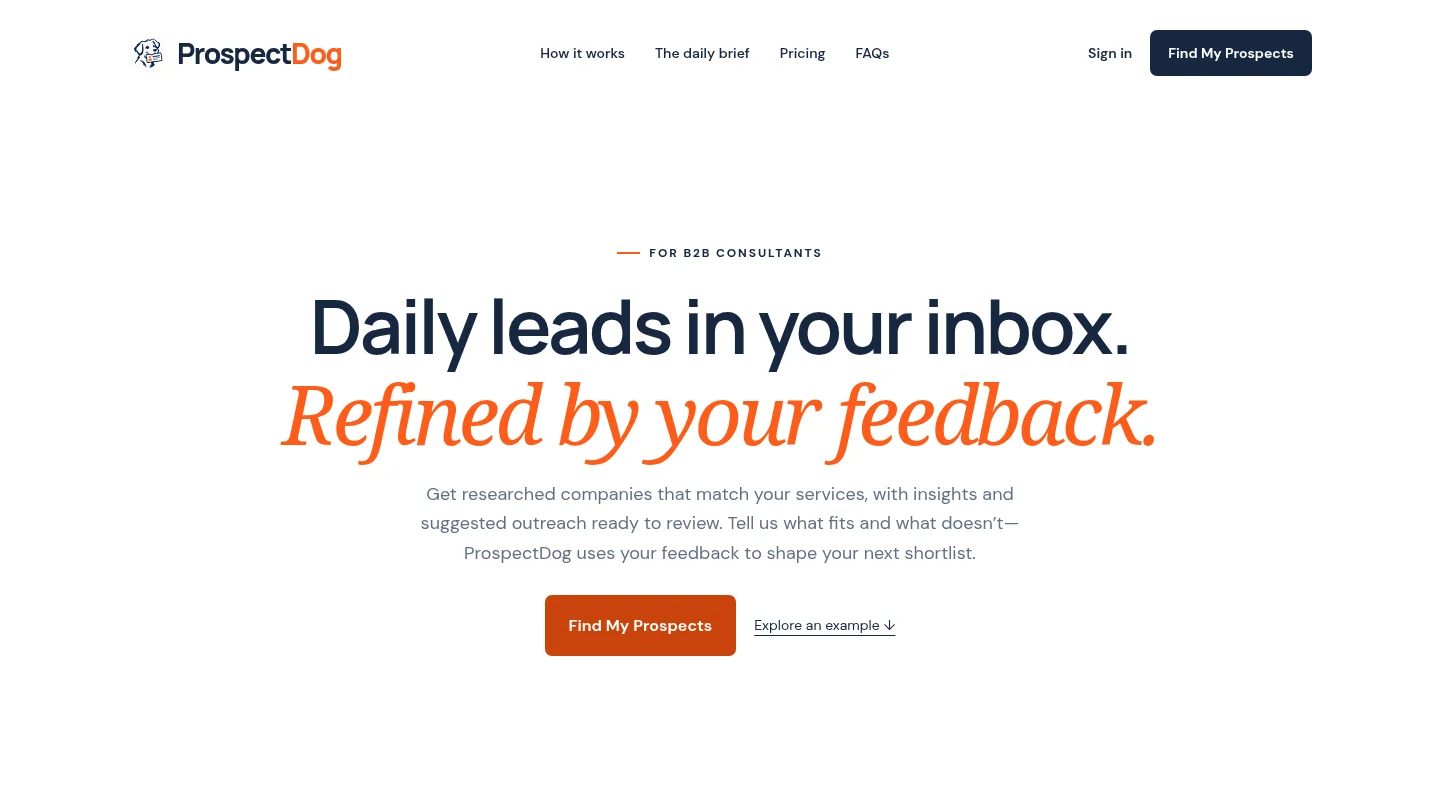
Best for: B2B consultants who want researched companies matched to their service, with evidence and outreach preparation in one daily brief.
Overview: Our research uses your service, expertise, ideal client, and market to shape a company shortlist. Each lead includes a source to review, a reason the company could need your service, a suggested subject line, an email draft, and practical conversation tips. Signals can include hiring, expansion, and service fit. They suggest potential need, not verified buying intent or confirmed contact details.
Starter provides one daily brief with up to 10 requested leads for $49 per month. Pro provides up to 20 requested leads for $99 per month. These daily allowances count requested results, so a brief may contain fewer relevant companies. You also get dashboard access, saved preferences, and lead and draft history. Feedback on what fits helps shape subsequent shortlists.
- Pros: Source evidence and a specific fit rationale let you review why a company appears on your list before contacting it.
- Pros: The daily brief combines research, draft preparation, and practical tips, helping consultants establish a repeatable prospecting routine.
- Cons: You must find or verify the right contact, personalize each draft, and send it yourself. Starter and Pro do not send prospect emails, replies, or follow-ups automatically.
- Cons: A daily requested-lead allowance does not guarantee that every requested result will be available and relevant.
2. Apollo
Best for: Sales teams and solo sellers who want prospect data and outreach activity in a more bundled sales workflow.
Overview: Apollo combines contact and account data with prospecting, enrichment, and sales engagement capabilities. Its plans use credits for activities such as accessing contact information and enriching records, so assess both the seat cost and how your team will use its allowances. If you are comparing different approaches, our article on Apollo.io alternatives for B2B prospecting covers options for sales teams and consultants.
- Pros: A contact database, enrichment, and sequences can bring several outbound tasks into one system.
- Pros: A free tier gives you a way to explore the workflow before choosing a paid plan.
- Cons: Credit allowances are part of the cost calculation, alongside seats and plan features.
- Cons: Contact records do not replace checking whether a company fits your specific consulting offer. You still need to review context and qualify prospects.
3. LinkedIn Sales Navigator
Best for: Consultants and sales teams who rely on professional-network research, account relationships, and timely role or company signals.
Overview: Sales Navigator supports lead and account discovery with advanced search filters, recommendations, alerts, and relationship features. Depending on the plan, it also includes tools such as relationship mapping, team connection paths, and CRM integrations. Check the current plan comparison carefully because capabilities differ by subscription tier.
- Pros: Its people and account search can help you identify relevant decision-makers and understand connections within a target company.
- Pros: Saved lead and account alerts provide useful context for deciding when to review a prospect again.
- Cons: Some collaboration and CRM features are limited to higher tiers.
- Cons: Treat account discovery as one step in qualification. Confirm the contact and the company’s potential need before you reach out.
4. HubSpot Sales Hub
Best for: Small teams and consultants who want to organize prospect activity, contacts, and deals around a CRM workflow.
Overview: HubSpot Sales Hub centers sales activity on contact and deal management. Its published offering includes a free tier for up to two users, with additional capabilities and paid tiers for teams that need more sales workflow features. Compare the limits, seat costs, and any applicable onboarding fees for the plan you are considering.
- Pros: Deal tracking and meeting tools help you keep prospect conversations and pipeline activity organized.
- Pros: The free tier provides a starting point for a small team that needs basic CRM organization.
- Cons: A CRM-centered workflow still requires you to supply and review evidence that a company fits your service.
- Cons: Check the plan details against your needs before budgeting for advanced sales features.
How should you assess evidence and outreach controls?
Separate company fit from contact validity. A hiring or expansion signal may suggest a relevant service need, but it does not establish who makes the decision or whether a listed email is current. Review the source, record why the company fits, and verify the contact before preparing an introduction.
Research quality and sales qualification are related, but they are not identical. In guidance about B2B research samples, Ipsos B2B research guidance recommends checking how a sample is sourced and verifying who respondents are. That guidance concerns research samples, not sales lead databases, but it offers a useful quality-control principle: do not treat a basic email check as proof of a prospect’s role or fit.
Also consider which part of the process you actually need to improve. Prospect research develops company context; contact databases supply records; sales intelligence adds account and relationship information; CRM tools organize ongoing work. Our articles on prospect research tools for consultants and a B2B sales intelligence platform explain how those categories support different workflows.
If you send commercial email in the United States, include compliance checks in your outreach process. The FTC CAN-SPAM guidance explains that the law covers commercial email, including B2B messages. Review current requirements for accurate message details and opt-outs, and check applicable rules when you contact people in other jurisdictions.
Conclusion
Choose the B2B lead generation tool that matches the work you need to do next. ProspectDog is designed for consultants who value researched company fit, source evidence, and drafts they can review; Apollo, LinkedIn Sales Navigator, and HubSpot serve broader data, relationship, and CRM workflows. Before committing, check how each option handles evidence, contact verification, pricing limits, and the tasks you must complete yourself.
Build a More Focused Prospecting Routine
If prospect research takes time away from client work, a regular brief can help you focus your effort. ProspectDog is built for B2B consultants and shapes company research around your service, expertise, ideal client, and market.
Start with one free researched brief after signup, with no card required. For ongoing research, Starter is $49 per month for up to 10 requested leads in one daily brief, and Pro is $99 per month for up to 20. A seven-day trial is available to eligible accounts with a payment method; subscriptions renew monthly unless canceled before the trial ends. You review the sources, verify contacts, personalize drafts, and send through your own email account. Start your free researched brief.
Frequently Asked Questions
What makes a lead generation tool useful for a consultant?
It should help you find companies that fit your service and show enough context for you to judge whether outreach is relevant. Contact verification and personalization still matter before you send a message.
Does ProspectDog provide verified contacts?
No. Each lead includes company research and a source to review, but you remain responsible for finding or verifying the right contact. Treat the research as a potential service-fit signal, not proof of buying intent.
Does ProspectDog send prospect emails automatically?
No. Starter and Pro provide suggested drafts, but you review, personalize, and send them through your own email account. Planned Autopilot features are not currently available to purchase.
How should you compare a contact database with research software?
A contact database helps you find records, while research software can help explain why a company may fit your service. Compare the source evidence and qualification work required for the workflow you need.
What should you check before automating outreach?
Confirm how the tool handles contact verification, message review, and opt-outs, and understand which steps remain your responsibility. For cross-border outreach, check the requirements that apply in each recipient’s jurisdiction.