


A larger contact list does not automatically create more relevant conversations. If you are comparing apollo.io alternatives, first decide whether you need contact data and sales sequences or company research that helps you choose whom to approach. Our Apollo.io competitors and alternatives overview offers a broader comparison, but your workflow should guide the choice.
That distinction matters: Gartner’s survey of 632 B2B buyers, conducted in August and September 2024, found that 73% actively avoid suppliers sending irrelevant outreach, according to Gartner’s buyer survey. A useful prospecting tool should help you connect a company signal to your offer, then decide whether contact is appropriate. These options range from research-first daily briefs to approval-based and automated outreach, so the right fit depends on how much qualification and sending you want to retain.
Which Apollo.io alternative fits your workflow?
ProspectDog is our recommended starting point for independent B2B consultants who want source-backed company research and draft outreach while retaining control of qualification and sending. Doctor Lead suits teams seeking research plus an approval-based CRM workflow; Flynt AI focuses on recruitment business development and automated multichannel sequences; Humen positions itself around startup outbound automation.
| Rank | Alternative | Research and delivery | Outreach control | Volume or cadence |
|---|---|---|---|---|
| 1 | ProspectDog | Researched companies, source information, and reasons they may need a consultant’s service | You review, personalize, and send drafts | One daily brief, up to 10 requested leads on Starter or 20 on Pro |
| 2 | Doctor Lead | Prospect research, buying signals, and campaign tools | Review and approve outreach before sending | Monthly plans list prospect allowances from 100 to 1,500 |
| 3 | Flynt AI | Recruiting signals including jobs, funding, and acquisitions | Automated email and LinkedIn sequences | Up to 30 leads per agent per day |
| 4 | Humen | Startup-focused outbound automation and prospect research | Automated personalized email outreach | Not specified in the available product overview |
1. ProspectDog
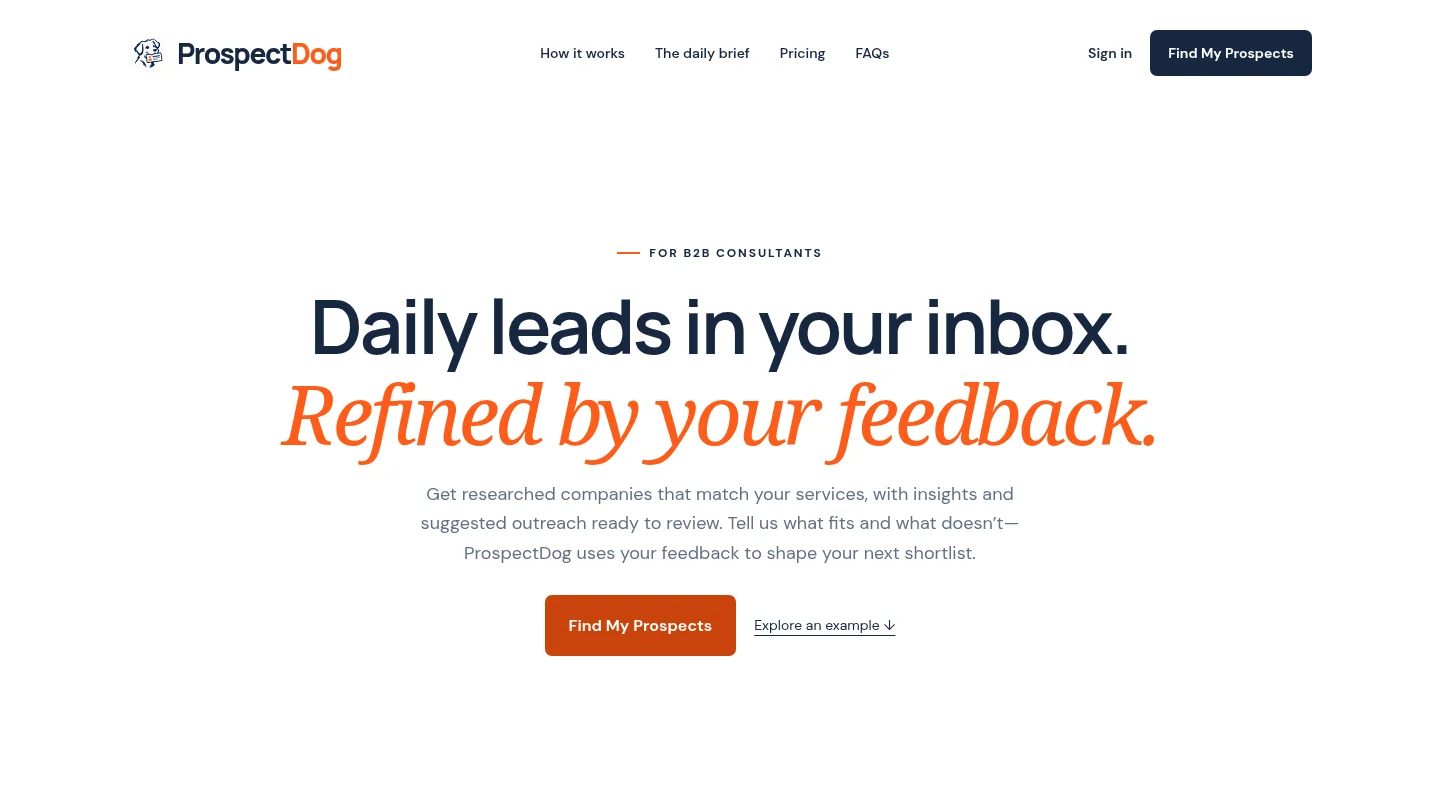
Best for: Independent B2B consultants who want a daily shortlist shaped around their service, expertise, ideal client, and market.
Our daily lead brief brings together researched companies, source information, a reason each company may need your service, and a suggested outreach draft. Signals such as hiring or expansion help you decide which companies deserve further attention. You review the source and qualify each prospect before finding or verifying a contact.
Feedback about which companies fit helps shape later shortlists. If you are comparing the broader category, our best lead research software for consultants overview can help you assess whether a research brief or a contact database better matches your routine.
Pros:
- Research connects a company’s situation to your consulting service, with source evidence for you to review.
- Suggested messages and conversation tips give you a starting point while leaving personalization and sending in your hands.
- One researched brief is available after signup without a card. Starter costs $49 per month for up to 10 requested leads in one daily brief; Pro costs $99 per month for up to 20.
Cons:
- Contact details and buying intent are not verified. You must qualify the company, verify the contact, personalize the draft, and send it yourself.
- Daily allowances count requested leads, so a brief can contain fewer relevant companies than requested.
2. Doctor Lead
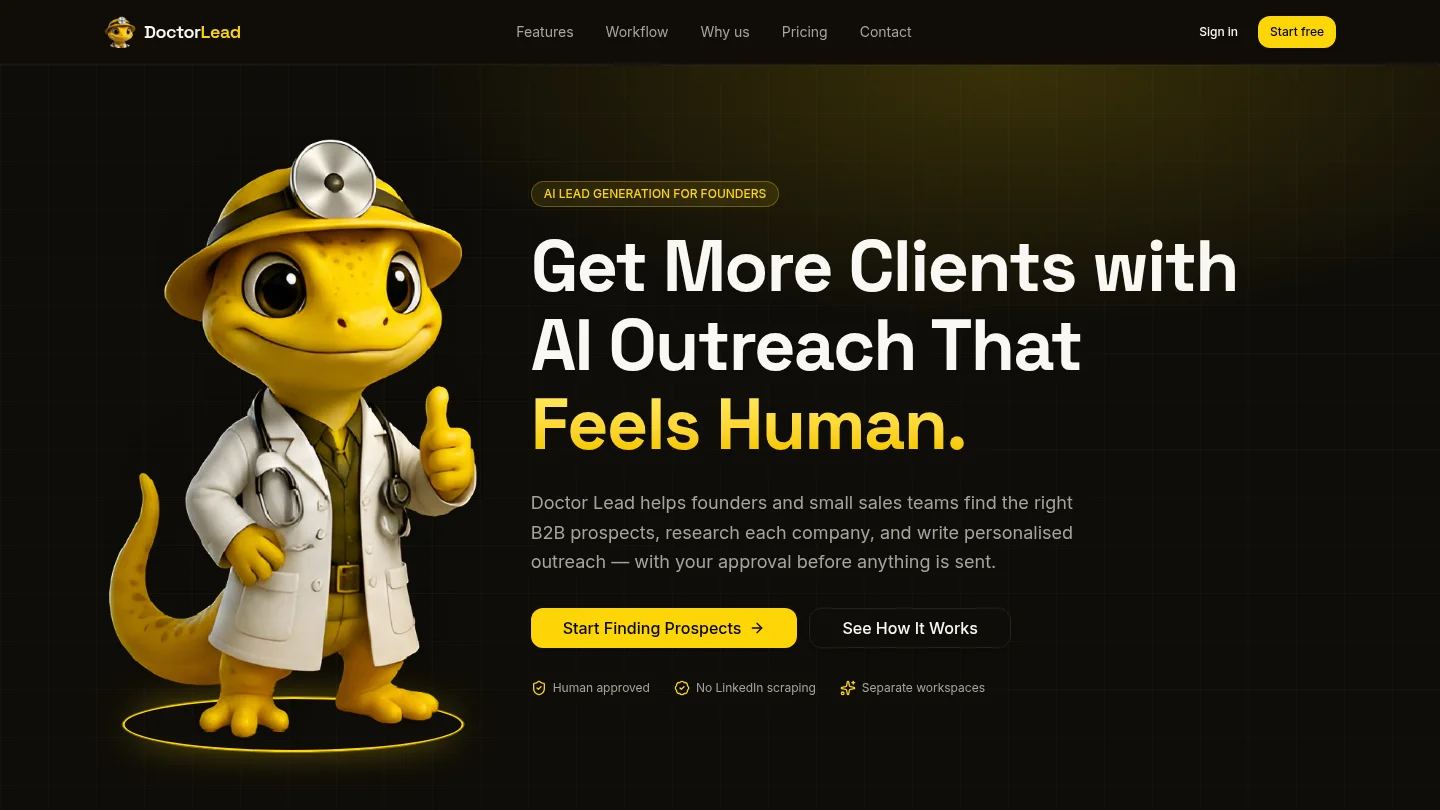
Best for: Founders and small sales teams that want prospect research, campaign management, and an approval step before outreach is sent.
Doctor Lead’s workflow starts with an ideal client profile, then researches prospects for buying signals, conversation hooks, and possible objections. It prepares personalized outreach and follow-ups for review. Its product overview also describes a CRM pipeline and reply tracking, making it a broader campaign workflow than a daily research brief.
Pros:
- You can review and approve each draft before it is sent.
- The pipeline and reply tracking organize prospects and campaign activity in the same workflow.
- The listed plans include a 14-day trial and monthly prospect allowances from 100 to 1,500.
Cons:
- Its plan structure centers on monthly prospect and campaign allowances. If you prefer a daily shortlist tailored to your consulting service, compare which workflow better fits your routine.
3. Flynt AI
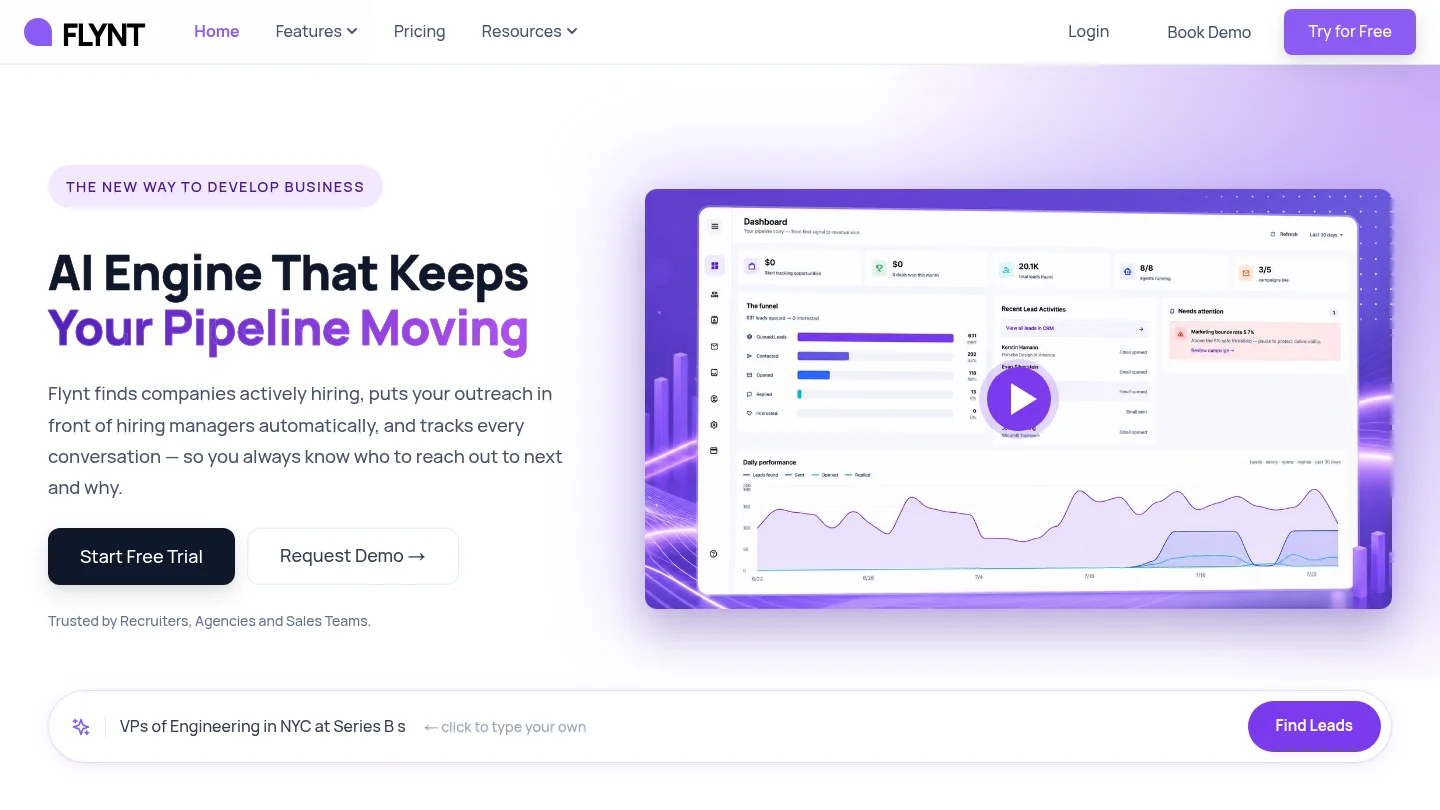
Best for: Recruiters and recruitment agencies seeking new client opportunities from hiring, funding, and acquisition signals.
Flynt AI describes a research workflow that identifies companies around recruiting-related events, then prepares tailored outreach. Its offering combines email and LinkedIn sequences with reply and pipeline tracking. The site states that each agent can deliver up to 30 leads daily. That automated workflow differs from a manual review process where you decide when each message is ready to send.
Pros:
- Hiring and company-event signals connect prospect research to recruitment business development.
- Email and LinkedIn steps, replies, and pipeline activity are presented as parts of one workflow.
- The service states a daily allowance of up to 30 leads per agent.
Cons:
- Its positioning is strongly focused on recruiting. That makes it a less direct match if you are an independent consultant researching companies for a different service.
- Outreach automation is a different fit if you want to qualify and send each message yourself.
4. Humen
Best for: Early-stage startups looking for an outbound workflow that combines prospect research with automated email outreach.
Humen describes its product around outbound automation, customer research, and ideal customer profile definition. Its overview also refers to semantic similarity for finding prospects and personalized emails. Its positioning is automation-centered, so consider whether that matches the amount of direct review you want before outreach.
Pros:
- Its stated focus brings prospect research and outbound activity together for early-stage startups.
- The product overview describes personalized email outreach as part of its workflow.
Cons:
- The available product overview does not specify a lead volume or delivery cadence. Confirm those details if they are important to your planning.
- If your priority is to review and send each message personally, check that the workflow supports your preferred level of control.
How should you compare research and outreach workflows?
Start by separating company research from contact discovery and message delivery. A tool that surfaces a company signal does not necessarily verify the right contact or establish buying intent. Check whether you can inspect the source, understand why a prospect appears, and decide what additional qualification is needed.
Then compare how messages move from draft to recipient. Some tools leave you responsible for review and sending; others support approval steps or automate sequences. Our overview of lead research software for B2B consultants covers questions to consider when comparing research-centered workflows.
Personalization is useful when it reflects the prospect’s actual context, rather than simply inserting a name into a template. McKinsey’s B2B growth research reports that one-to-one personalization was used by 20% of leaders, compared with 5% of their peers, in the research cited in its analysis. Treat that as context for prioritizing relevant outreach, not as a performance guarantee for any tool. McKinsey’s B2B growth research provides further detail.
For commercial email sent to US recipients, the FTC says CAN-SPAM applies to business-to-business messages as well as other commercial email. Requirements include accurate sender information, non-deceptive subject lines, a valid postal address, and a way to opt out. Review the FTC’s CAN-SPAM guide when planning US campaigns; other markets may have different rules.
Choose an Alternative That Fits Your Prospecting Routine
The best Apollo.io alternative depends on which work you want the tool to handle. For independent B2B consultants who value sourced company research and personally reviewed outreach, ProspectDog is the strongest fit in this selection. Doctor Lead offers a campaign and CRM-oriented workflow, Flynt AI focuses on recruiting automation, and Humen targets startup outbound. Before switching, map the tasks you need to replace, then assess a sample of leads against your own ideal client criteria.
Build a More Relevant Daily Prospecting Routine
If your main challenge is deciding which companies are worth approaching, a focused research routine can be more useful than adding another broad contact list. Our workflow is designed for B2B consultants who want source evidence and a relevant conversation draft, while keeping prospect qualification and outreach under their control.
Start with one free researched brief after signup, with no card required. For ongoing research and dashboard access, Starter costs $49 per month for up to 10 requested leads in one daily brief, while Pro costs $99 per month for up to 20. Eligible accounts may choose a seven-day trial with a payment method; subscriptions renew monthly unless canceled before the trial ends. Each brief includes company research, source information, a reason the company may need your service, and an outreach draft to review. You find or verify contacts, personalize the message, and send it through your own email account. Try our researched lead brief for B2B consultants.
Frequently Asked Questions
Which Apollo.io alternative is best for B2B consultants?
ProspectDog is designed for consultants who want researched companies matched to their service, source information, and suggested outreach. You review and qualify each prospect, verify the contact, and send the message yourself.
Does ProspectDog verify contact details?
No. You are responsible for finding or verifying the right contact before sending outreach. Research signals indicate potential service fit, not confirmed buying intent.
Does ProspectDog send prospect emails automatically?
No. Starter and Pro provide drafts for you to review, personalize, copy, and send through your own email account. They do not send prospect emails, replies, or follow-ups.
Can you try ProspectDog before paying for a subscription?
Yes. You can receive one free researched brief after signup without a card. A separate seven-day subscription trial may be available to eligible accounts with a payment method.
How does a research-first tool differ from outreach automation?
A research-first workflow helps you assess companies and prepare relevant messages, while you retain qualification and sending. Outreach automation can take on more campaign activity, so choose according to the review and control you want.