

An AI consultant who opens with a generic promise asks the prospect to find the relevance. A current hiring post, new location, or expansion gives you a more concrete starting point, provided the change connects to a service you actually offer. Our outreach preparation software for AI consultants is designed around that practical step: review a researched company, inspect the reason for contact, then personalize a draft before sending.
Can researched company signals improve outreach conversations for AI consultants? Yes, when the evidence supports a specific question rather than a presumptuous pitch. Signals can suggest potential service fit, but they do not establish budget, urgency, decision-maker interest, or a verified contact. Research sharpens your opening; your judgment determines whether a conversation is appropriate.
When Does a Company Signal Create a Useful Opening?

Imagine an online retailer expanding its support team while its ecommerce operation grows. That hiring signal does not prove the company wants automation. It does give an AI consultant who works on customer support workflows a reason to examine the company’s needs and consider a relevant question.
The useful connection is between the company’s change and your specific service. If you help retailers automate repetitive customer questions, you might ask whether support volume is changing and offer to share a practical workflow idea. If your work focuses on internal forecasting, the same support hiring signal may not justify contact. Service fit matters more than the novelty of the signal.
A recruiter-led discussion hosted by Seattle University in January 2026 considered which AI roles employers were hiring for and how needs differ by industry and company size, according to a January 2026 recruiter discussion. For outreach, treat a job posting as context to interpret, not a stand-alone verdict about a company’s buying plans.
Which Signals Should AI Consultants Prioritize?
Start with a clear reason your service would matter to a particular company. Hiring, expansion, or a new initiative can indicate a change in workload or priorities, but the signal becomes more useful when it maps to a problem you can address. A company adding support staff, for instance, might need help with workflow design, automation, or service operations. Which possibility fits depends on your offer and the evidence available.
Prefer specific, recent information from a source you can inspect, such as a company careers page or announcement. Note what the source actually says, when it was published, and what it does not establish. A broad headline about AI adoption can help you understand an industry, but it cannot establish that a particular company needs an outside consultant.
McKinsey’s 2023 State of AI report framed generative AI as a breakout year. That sector-level context can help you think about where to look, but it cannot show whether one account has a problem you can solve. Use company-specific evidence to support the reason for contacting that company.
How Can You Check a Signal Before Reaching Out?
A promising signal still needs a source check. Open the original announcement or job listing rather than relying only on a short summary. Confirm that it refers to the company you intend to contact, note its date, and check whether the apparent change is still relevant.
Then separate what you observed from what you infer. “The company is hiring customer-support specialists” is an observation if the posting confirms it. “The team is overwhelmed and needs automation” is an assumption unless you have evidence to support it. Keep your source quality and your inference visible in your notes so your message does not present a guess as a fact.
This distinction matters beyond business development. Readers comparing the best AI symptom assessment tools also need to distinguish a system’s output from a professional diagnosis. In outreach, use the same discipline: a company signal starts an inquiry; it does not make the decision for you.
Before contacting anyone, find the appropriate person and verify their contact details independently. A relevant company does not automatically identify the right decision-maker, and an unverified address can undermine otherwise careful research. Contact verification remains part of your process.
How Do You Turn Evidence Into a Conversation Opener?
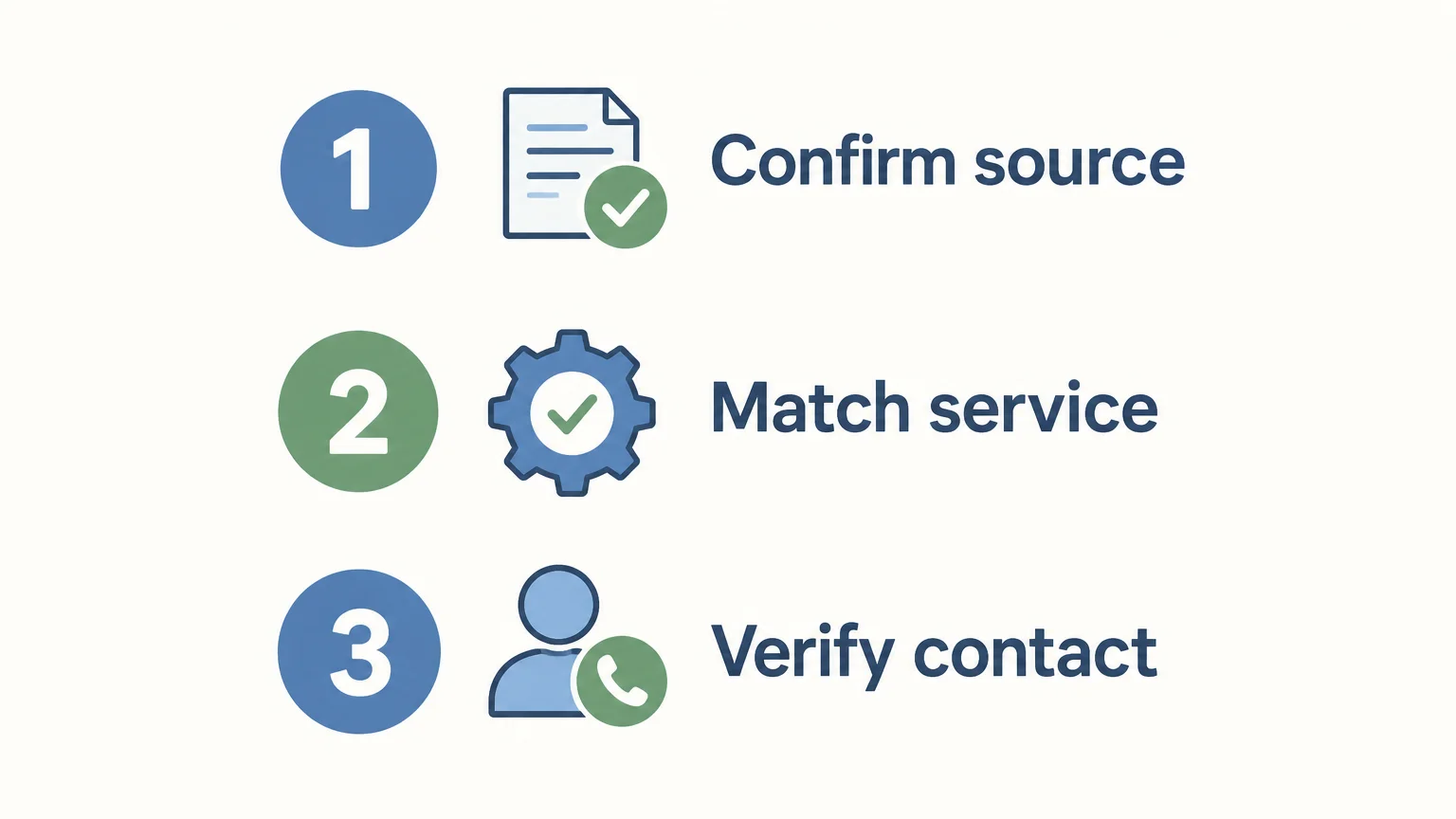
A useful first message connects one verified observation to one relevant service and one easy-to-answer question. You do not need to describe every capability you offer. Your aim is to make the reason for contact clear enough that the reader can decide whether the topic is relevant.
- Name the observation. Refer to the actual hiring, expansion, or other change you reviewed.
- Connect it to your service. Explain briefly why the observation relates to a problem you help address, without claiming to know the company’s internal situation.
- Ask a focused question. Offer a low-pressure next step, such as asking whether the topic is a current priority or offering to share an example.
For example: “I noticed your team is hiring support specialists as your online store grows. I help ecommerce teams assess which repetitive customer questions are suitable for automation. Is reducing manual support work a priority as the team expands?” This opener states the evidence, explains the connection, and invites correction instead of assuming a problem.
Keep the draft short enough for the recipient to understand quickly. Remove any sentence that could be sent unchanged to a company with a different signal. If you are comparing ways to structure your research workflow, our lead research platforms for AI consultants overview can help you consider the preparation stage alongside message writing.
How Can You Make Signal-Based Research Repeatable?
A simple routine makes it easier to apply the same judgment across prospects. Define your ideal company and the changes most relevant to your service. For each candidate, record the source, date, observed fact, possible service connection, and any unanswered question. This gives you a basis for deciding whom to contact and what to verify next.
Review the list before sending messages. Remove companies where the source is weak, the signal is outdated, or the service connection depends on too many assumptions. Then find or verify the relevant contact and personalize the draft. The time saved during research is useful only if you reinvest it in qualification and a message that reflects the company’s actual context.
Consulting’s broader relationship with AI is also part of public discussion. HBR’s January 2026 podcast asks where McKinsey and consulting go from here. For your own prospecting, industry-wide discussion can inform your perspective, but account-level evidence should still support each outreach reason.
If you want a more consistent research cadence, our article on daily lead research for consultants addresses how research fits into regular prospecting. A routine should leave room for your review, contact checks, and personalization rather than treating a suggested message as ready to send.
Make the Signal Earn the Conversation
Evidence-led outreach conversations begin with a company change you can verify and a clear connection to your AI consulting service. Treat the signal as a reason to investigate, not proof of buying intent. When you have checked the source, qualified the fit, verified the contact, and personalized a concise message, you have a more credible basis for starting a conversation.
Build a More Informed Prospecting Routine
Once you have a defensible signal, the remaining work is finding relevant companies consistently and preparing a message you can review and personalize. A focused research routine gives you more time to decide which conversations merit your attention.
We provide B2B consultants with a daily researched brief that includes company sources, reasons a business may need your service, a suggested email draft, and practical conversation tips. You can receive one free researched brief after signup without a card. As of 2026, Starter provides up to 10 requested leads in one daily brief for $49 per month, while Pro provides up to 20 for $99 per month. Eligible seven-day trials require a payment method and renew monthly unless canceled before the trial ends. You review each signal and send messages through your own email account. Explore our lead research and outreach preparation service.
Frequently Asked Questions
Does a hiring announcement prove that a company wants AI consulting?
No. Hiring can point to a change worth researching, but it does not establish budget, urgency, or interest in outside help. Check the source and connect the role to a service you actually provide.
Which company signals are useful to AI consultants?
Hiring and expansion can be useful when they relate to your specialty, such as workflow automation or operational support. The signal is more actionable when it is recent, verifiable, and tied to a specific company need you can investigate.
How should I verify a company signal?
Review the original announcement or job posting, confirm the company and publication date, and distinguish its stated facts from your interpretation. Then identify and verify the appropriate contact before sending outreach.
How personalized should an outreach message be?
Include one accurate observation, one clear connection to your service, and one focused question. Avoid adding assumptions or generic claims that could apply to any company.
Does ProspectDog send messages to prospects?
No. ProspectDog provides researched companies, source information, suggested drafts, and conversation tips for your review. You remain responsible for qualifying prospects, verifying contacts, personalizing messages, and sending them.